Agustin Forzani’s Mercatus Fellowship Story
From Argentine Farmland to Institutional Economics: How Agustin Forzani Discovered Classical Liberalism and Changed His Understanding of the World
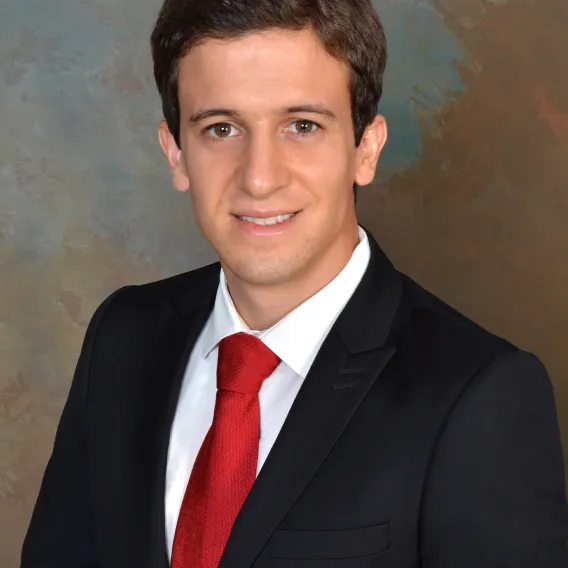

undefinedundefined
rowing up in rural Argentina, Agustin Forzani was surrounded by agriculture. His family owns ranches, farms, and a flour mill. While in university, studying both agribusiness and economics simultaneously, he found a professor with a classical liberal perspective, Diego Marcos. “His classes were the only classes that were always full,” Agustin recalls. “He was a great professor, and also I liked his ideas.” That foundation would guide him, but it wasn’t until a chance WhatsApp connection with Argentine libertarian Javier Milei that Agustin’s path crystallized. When asked where to study in the US, Milei suggested one place: George Mason University. “He said, you should go to George Mason. There is a classical liberal perspective there.” Agustin applied, was accepted immediately, and moved to Virginia knowing almost nothing about what awaited him.
[Javier Milei] said, you should go to George Mason.
The MA Fellowship found Agustin almost by accident. Early in his master’s program, Professor Rosolino Candela mentioned the Hayek Program’s Philosophy, Politics, and Economics (PPE) seminars in Fairfax. Agustin started attending. Anne Hobson, then the MA program manager, noticed him there consistently, engaged despite no requirement to attend. Anne explained to him the MA Fellowship and Agustin applied mid-semester and joined the following year.
The MA Fellowship was a two-year program for students pursuing a master’s degree in economics at George Mason University who were interested in gaining an advanced degree in applied economics in preparation for a career in public policy.
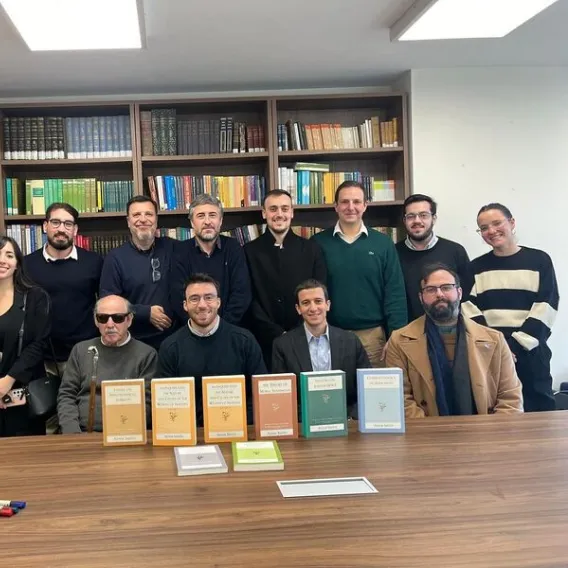
In other places, they teach you and you end up with a perspective of like what you know is great and you are the number one of what you know. But here is the opposite, like what you don’t know is vast and you have to find out about that.
What George Mason offered was fundamentally different from other institutions. “In other places, they teach you and you end up with a perspective of like what you know is great and you are the number one of what you know. But here is the opposite, like what you don’t know is vast and you have to find out about that.”
Rosolino Candela became a key mentor, teaching Agustin in multiple classes. But the fellowship exposed him to an intellectual constellation. Peter Boettke taught him in several classes that “changed my whole perspective.” Chris Coyne’s summer class opened new ways of thinking about defense and peace, and Bobbi Herzberg (who had studied under Elinor Ostrom) was teaching exactly when Agustin needed that knowledge for his emerging research.
It was in this environment that Agustin published his first article, co-authored with Don Boudreaux. “I basically wrote about Argentina, and Don helped me a lot with that article. We published it in an outlet here in the US, but back in Argentina one of the most important newspapers picked it up and it was all over the news. So yeah, that was great.” That early success opened doors and proved a catalyst for further research.
More importantly, the fellowship gave Agustin a conceptual framework, institutional economics, that transformed how he understood the world. The intellectual lineage of Buchanan and Tullock, whose ideas permeated George Mason, shifted his fundamental thinking. “You end up realizing that it’s not that bad people do bad things and good people do good things. Because that’s not a good way to understand the world and to learn about it. The rules and incentives are much more important. The institutional structure is much more important than people inside those institutions.”
This shift was profound. “I’ve applied that framework to my whole life. When I work in my family business, I realize it’s not that this person or that person is doing a good or a bad job — it’s that we have a good or a bad structure of incentives and rules. And when we have to adapt something, we have to change the incentives, not the person. Most of the time, not the person.”
[The MA Fellowship] changed my mind completely, my way of understanding the world, my perspective. I changed as a person.
The framework also informed his scholarship. During his fellowship, Agustin published a paper with Stefanie Haeffele and Jordan Lofthouse on COVID regulations, applying Israel Kirzner’s entrepreneurial discovery perspective to show how different state rules created or hindered economic opportunities. “For example, in Pennsylvania you couldn’t buy alcohol, but in Delaware you could — so you’d cross the bridge, buy it in the other state, and come back. Same thing with marijuana across different states. We tried to show how these different rules and regulations diverted economic opportunities, and some opportunities just moved to the background.”
In his teaching, Agustin carries forward what Mercatus taught him. “I had the opportunity to be invited to teach at a university in Argentina that is much more aligned with George Mason.” He brings the interdisciplinary approach, the bridge between economics and philosophy, sociology, and psychology that Pete Boettke emphasizes. “The gap between economics and mathematics is well studied already, but the gap between economics and philosophy and sociology and anthropology and all of these different areas is not really well studied and there are lots of different areas in which we can engage and bridge the gap.”
Agustin is currently a Research Assistant for Rosolino Candela at the Mercatus Center, but since finishing his MA he has maintained relationships with Mercatus scholars. “When I have time, I try to engage with them, I still go to the PPEs when I can, and to different seminars, for example the APEE, which was in Guatemala last year, and Markets & Society in Fairfax.” He’s organizing a seminar in Argentina—the International Adam Smith Society Seminar in Buenos Aires—deliberately trying to bring George Mason faculty to present alongside Argentine scholars.
Agustin describes what the fellowship meant to him as a person. “It changed my mind completely, my way of understanding the world, of my perspective. I changed as a person. I am different from the Agustin that started here in 2019 at George Mason. And I will be, as I said, forever grateful for that change, that change as a person.”
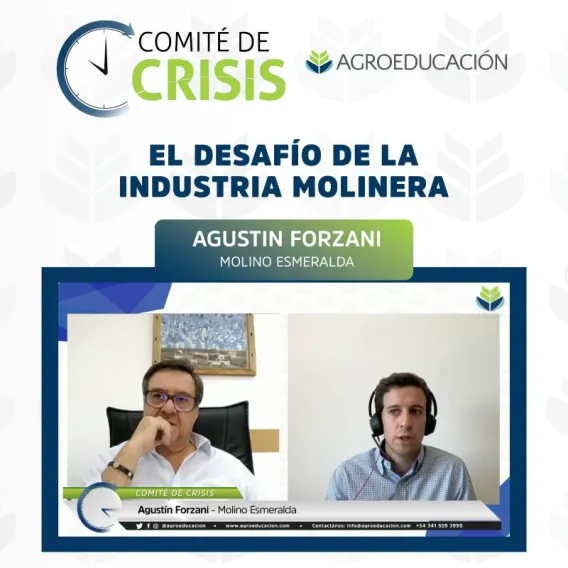
In his final reflection, speaking to students in Argentina through a video connection with his professor Diego Marcos during the pandemic, Agustin urged young people not to miss the opportunity. “Here are people that are eager to help you with the money that you need to study here and with all the resources that you need. Don’t miss this opportunity available here. There are lots of opportunities in the US. But here I think you will find a different perspective and also the opportunity to study in the US. That’s what I would recommend to people around the world. Don’t miss this opportunity because I don’t think there is another one similar to this one.”