Alexander Salter’s Mercatus Fellowship Story
From Theory to Tenure: How Intellectual Rigor at Mercatus Helped Alexander Salter Launch a Career Advancing GMU-Style Economics

undefinedundefined
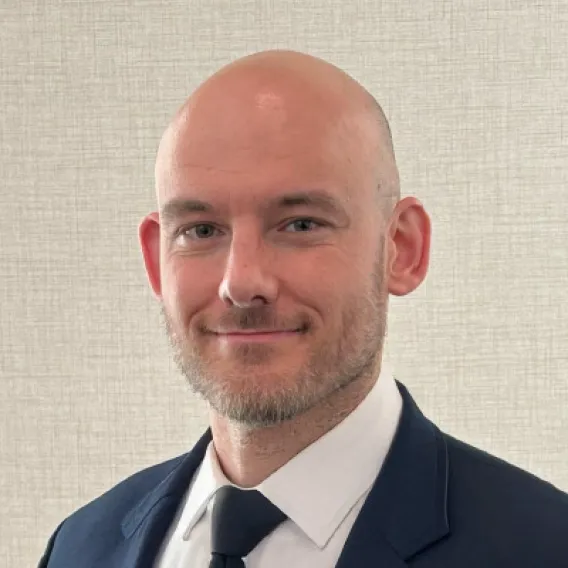
lexander Salter arrived at George Mason University with plans for investment banking. But after the 2008 financial crisis and a series of turns that led him to graduate school, everything changed. "I went to graduate school for exactly the wrong reason," he admits. "And then everything actually turned out okay because once I got there, I realized, wow, I really like this lifestyle focused on intellectual inquiry. I really want to make my life and my career about answering these sorts of questions." Today, as the Georgie G. Snyder Professor of Economics at Texas Tech University, Alexander credits his Mercatus PhD Fellowship with shaping not just his thinking but his entire trajectory.
When Alexander reflects on his time as a Mercatus PhD Fellow, he doesn't just remember the classes or papers, he remembers the moment he realized economics was not about models, but ideas. "It was understood that we were there to put forth original and provocative theses about the way the world worked," he says. "Even if we disagreed, we were ultimately partners on a shared quest of intellectual inquiry."
The PhD Fellowship is a competitive, full-time fellowship program for students pursuing a doctoral degree in economics at George Mason University. PhD Fellows receive rigorous training in market process economics, public choice, and institutional analysis through advanced coursework, close faculty and scholar mentorship, and dedicated workshops and reading groups advancing the study of freedom, human flourishing, and social change.
Because of what Mercatus offered, I was able to go on the job market with a dozen academic publications already on my CV.
Alexander credits the fellowship with giving him advantages he couldn't find elsewhere. "Because of what Mercatus offered, I was able to go on the job market with a dozen academic publications already on my CV," he recalls. "That was a huge advantage and it's an opportunity that you can have at Mason that I just don't see a lot of other schools offering."
His experience in the PhD fellowship research workshop stands out. "We were very serious critics in the sense that we were trying really hard to make each other's papers better," he says. "You're going to write some bad papers in the beginning. That happened to me, that happened to everybody. But the great thing about the Mercatus program is it provided all the support that I needed to take an idea to produce a first draft and eventually get published."
GMU-style economics is something that will pay dividends throughout my scholarly career.
Now the Georgie G. Snyder Professor of Economics at Texas Tech, Alexander continues to embody the Mason style of economic thinking. "Every paper that I write in some way takes this basic way of thinking and applies it to something else," he says. "GMU-style economics is something that will pay dividends throughout my scholarly career."
For Alexander, the Mercatus network continues to be a critical foundation for his academic life. "I still co-author papers with many people who overlapped with me as part of the Mercatus program," he explains. "More often than not, I'm working with people who have some affiliation with GMU in some way. There are all sorts of opportunities for collaboration that I wouldn't have had but for Mercatus funding and the Mercatus Fellowship."
There are all sorts of opportunities for collaboration that I wouldn't have had but for Mercatus funding and the Mercatus Fellowship.
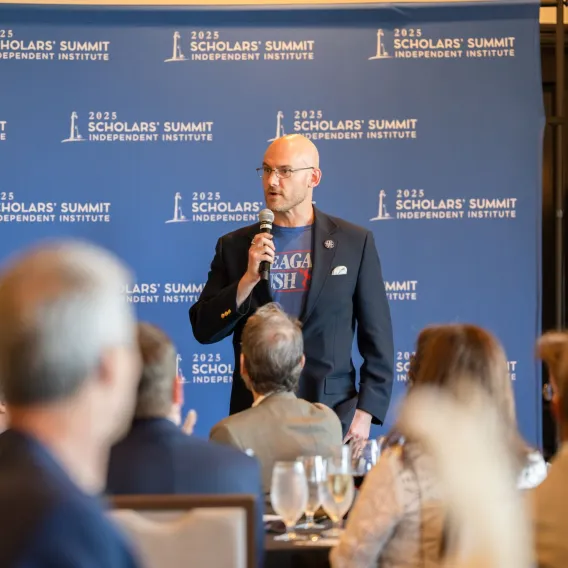
To prospective fellows, he offers a clear case: "GMU and Mercatus together have done an excellent job at getting students to the stage where they're making their own original contributions to human knowledge faster and better than comparable programs. Why wouldn't you want to take advantage of that?"
Alexander's journey from an uncertain graduate student to a prolific scholar exemplifies how the PhD Fellowship cultivates researchers who advance important ideas and shape how future generations think about economics and human flourishing.