Alexander Schaefer’s Mercatus Fellowship Story
How Mercatus Shaped Alexander Schaefer’s Research Agenda

undefinedundefined
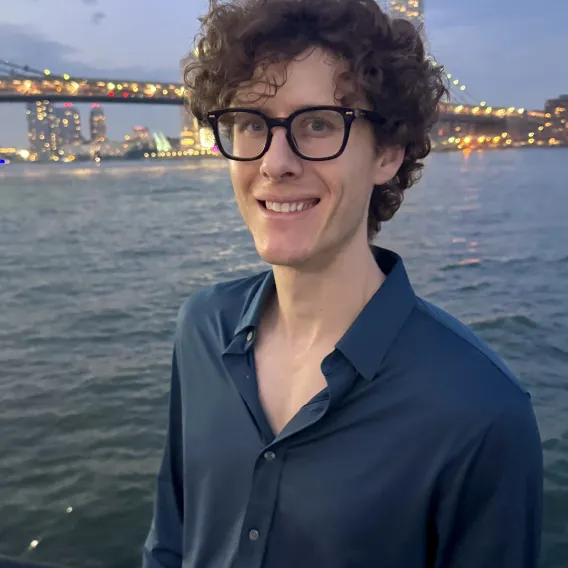
lelxander Schaefer became part of the Adam Smith Fellowship, while he was pursuing a PhD in economics at the University of Arizona. His peers Danny Shahar and Brian Kogelmann had done the fellowship and highly recommended it.
The Adam Smith Fellowship, a one-year program, brought together doctoral students from different universities and disciplines. Through collaborative discussions with peers and leading scholars, fellows discovered how market process economics, public choice theory, and institutional analysis illuminate questions about human flourishing and social change.
“It's hard to know what the counterfactual is, what it would be like if I didn't do the Smith Fellowship. But what I can say is that in pretty much everything I've published, I am citing one or more of the works that I studied in the Adam Smith Fellowship. Like it just had a really huge impact on the architecture of my thought and on the kind of, I guess, lens I use to see the world.”
Just long conversations with Pete Boettke or Chris Coyne were always just eye opening because they know so much about these topics and have so much to sort of just share and so much wisdom to impart.
The readings were meaningful, but the conversations and the ideas that came out of those discussions were eye opening. “For me it was some of the hours spent after a long day of discussing ideas when, you know, my new friends and I would just sit around and chat. Those were always very, very fun. But getting to know the faculty at GMU, and Mercatus, the faculty they brought in for Mercatus was really great. Just long conversations with Pete Boettke or Chris Coyne were always just eye opening because they know so much about these topics and have so much to sort of just share and so much wisdom to impart.”

Several ideas have turned into papers and several of those papers have been published. So, it was just a really good source of ideas and of topics for research and further inquiry
Alexander and other fellows would take notes during sessions, and many of those notes became papers. “Several ideas have turned into papers and several of those papers have been published. So, it was just a really good source of ideas and of topics for research and further inquiry. These conversations are very discursive and informal. You just talk about whatever's on the top of your head at the moment in the conversation, but like, having read these texts, you have a few ideas, a few thoughts, but it lays kind of a program or a roadmap for later going in and actually looking at the text again and doing deeper research so you can actually get a paper out of it.”
Today, Alexander is an assistant professor of philosophy at Tulane University. As a professor, he is putting the fellowship's ideas into action. “I taught the socialist calculation debate. Basically, from start to finish… we read, Lange, Lerner along with Mises and Hayek and went all the way up and read almost an entire book by Don Lavoie. These are all things I encountered as an Adam Smith fellow. So, I'm actually teaching a lot of the materials that I studied as Adam Smith fellow in my courses.”
I think Mercatus is doing an excellent job. I think a lot of people, a lot of scholars have been really influenced by the fellowship and have brought those ideas that they encountered into their research and their teaching
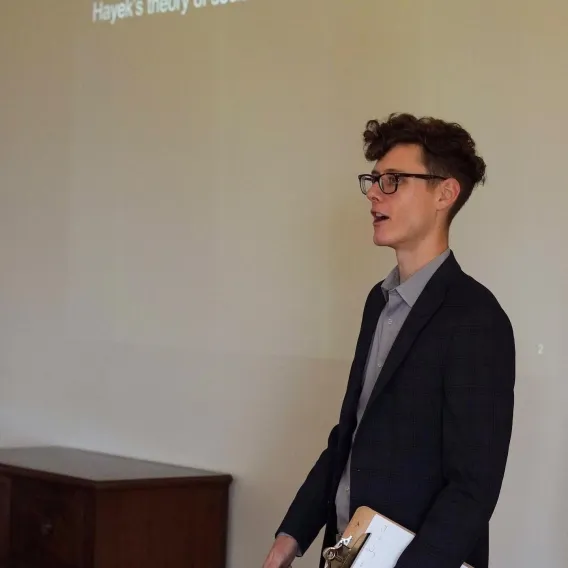
When Alexander reflects on what makes Mercatus special he stresses genuine openness to diverse perspectives and access to materials not found in graduate programs. “Mercatus can bring in people from multiple disciplines and with different political inclinations, get them all to read the same texts and put us in a room together for hours on end, lead to some really interesting conversations…The conversations were extremely open and non-judgmental. Some people have this perception of the Mercatus Fellowship of being some kind of libertarian bastion where you can't talk. And that's just not at all true…You have the opportunity to expand your perspective, to encounter and really engage with materials that you're not going to encounter in your graduate program. The concepts that you encounter as a Mercatus fellow, whether it's an Adam Smith fellow or a Don Lavoie fellow are just not on a standard syllabus in graduate programs.”
He shared his final reflections on Mercatus and the fellowships’ impact in the careers of many scholars “I think Mercatus is doing an excellent job. I think a lot of people, a lot of scholars have been really influenced by the fellowship and have brought those ideas that they encountered into their research and their teaching.”