Nic Bewley’s Mercatus Fellowship Story
Nic Bewley: How Theory Changed Everything

undefinedundefined
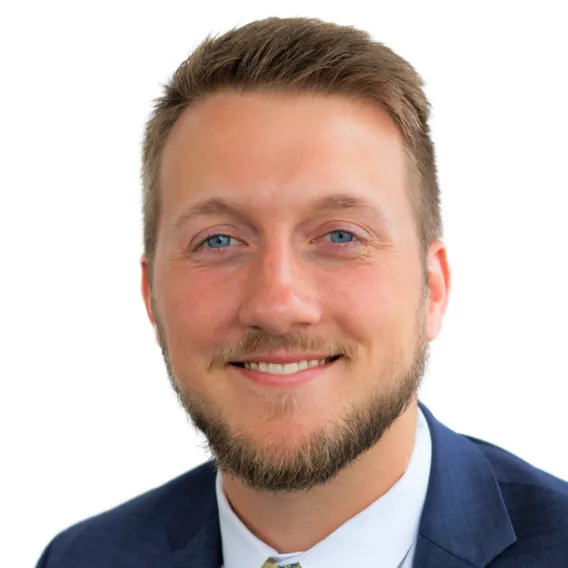
Nic Bewley went to Hillsdale College for his undergraduate degree and while he majored in financial management rather than economics as his major, he took some classes in economics "It was just interesting to see just at the fundamental microeconomic level how something like a macroeconomic policy can totally skew the microeconomics decision making and how it can create inefficiency and so I became interested just in deregulation generally."
He was interested in economics as a topic and was introduced during his undergrad to a former GMU professor’s podcast on economics. He listened to the podcast casually over years. "I think I was introduced to Russ Roberts' podcast Econ Talk while I was an undergrad and I always just kept it in the podcast queue."
There's not going to be an opportunity that's this good. It aligns with my values, the things I want to study and it's funded. Like how could I get better than that?
Then a career change led him to Northern Virginia. He met someone from church who mentioned they were previously an MA fellow and Nic brought up Econ Talk "Do you know the econ talk podcast? Cause I knew Russ Roberts was once a professor here and associated with the Mercatus center. And so, I figured he would know. And he was like, yes, love the Econ Talk podcast. And we chatted about it more and more. And it just turned out that I was looking for a career change and looking to do something different and had an interest in economics. And it was like, wow; he kind of sold me on the MA fellowship and I was like, wow, that sounds like an amazing deal" That conversation changed everything

We had people from all over the world in the fellowship. And I can't really speak for everyone, but I would think that everyone felt during their time here that they were welcomed, that they were accepted, that their thoughts were seen as important, that their perspective was valued.
The MA Fellowship was a two-year program for students pursuing a master’s degree in economics at George Mason University who were interested in gaining an advanced degree in applied economics in preparation for a career in public policy.
What appealed to him was the emphasis on theory over quantitative formulas. "I'm more interested in the theory because with statistics, it's like, you can learn how to do all of the things, but the theory behind why you're doing the statistics is what really matters. So, I found that I would be more interested in learning theory, learning how to think about the thing, than learning how to do a specific task."
The funding was also critical. "Living in Northern Virginia is very expensive. My wife and I; my wife is now a stay-at-home mom. And I knew that we wanted that for her, that option for her. But if I was going to go into a massive amount of debt to take on an advanced degree...the fact that I could get an advanced degree and have funding through the Mercatus Center was like, wow, it kind of made it a no brainer for me. Like there's not going to be an opportunity that's this good. It aligns with my values, the things I want to study and it's funded. Like how could I get better than that?"
The MA fellowship has helped my career tremendously. It has helped me to get connected with so many people that I can't even estimate the value to my career that it's been…
During the fellowship, exposure to diverse perspectives changed his thinking. He came in with free-market ideas but realized how much more complicated the world was than theory suggested.
"I don't know how much I've changed my views specifically. I think one of the things that has changed is that I've realized that everything is a lot more complicated than it seems at first and that like...You can have a nice theory about the way things should be. But we're at a certain point today and you can't just like wipe the board clean and start over with a nice clean theory. You have to somehow get from where we are right now to where you think we would be better off."
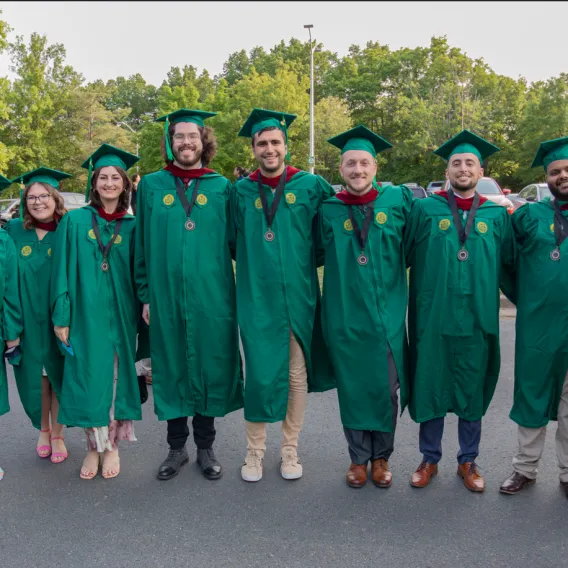
What stands out most about the fellowship, beyond the content, the funding, the network is the multicultural environment. "We had people from all over the world in the fellowship. And I can't really speak for everyone, but I would think that everyone felt during their time here that they were welcomed, that they were accepted, that their thoughts were seen as important, that their perspective was valued."
When Nic graduated, a Mercatus connection opened a door. Nick Krosse, another MA fellow who graduated a few years earlier, had joined Potomac Global Partners a financial consulting firm founded by Paul Atkins, who later became chairman of the SEC. Krosse recommended Nic. "They really liked him and thought he was a great employee. And so, the chief of staff at Potomac then reached out to Jessica [Carges] and said, hey, we got Nick Krosse a couple of years ago. We're looking for anybody else you have because we really need to hire some new people and we've really liked what we've seen out of Mercatus." At Potomac, Nic applied what he learned constantly working on regulatory matters.
Now, Nic is a Firm Administrator at IslerDare PC, a boutique law firm. "It [the MA fellowship] has helped my career tremendously. It has helped me to get connected with so many people that I can't even estimate the value to my career that it's been… I came into the program liking free exchange of ideas, free market principles, things like that, I left the program so like strengthened by what I learned here and so just benefited and prepared for going out into the field and having a career and I hope that I can affect policy in the future for the positive."