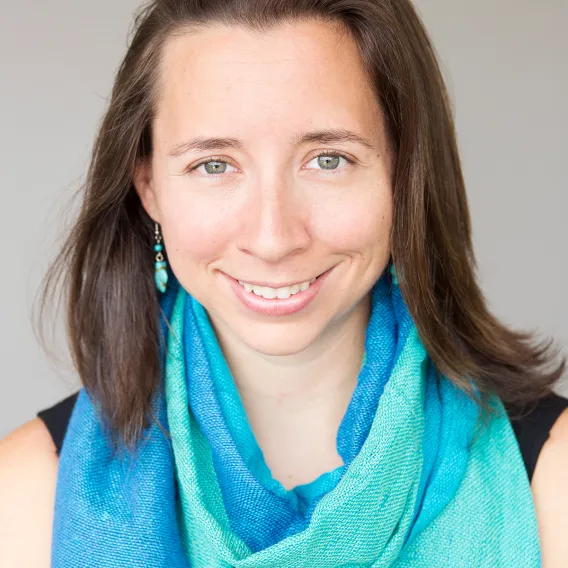
Anne Hobson's Mercatus Fellowship Story
“This Is Exactly Where I Want to Be”: How One Fellowship Sparked a Career in Emerging Tech Policy

undefinedundefined
hen Anne Hobson joined the Mercatus MA Fellowship, she wasn’t following a polished plan but searching for meaningful direction. “I didn't really have a good idea of what I wanted to do at all,” she admitted.
The MA Fellowship was a two-year program for students pursuing a master’s degree in economics at George Mason University who were interested in gaining an advanced degree in applied economics in preparation for a career in public policy.
Not only did it give me the credibility to be able to apply to jobs like that at Facebook, but it also gave me a skill and made me realize that I like exercising that skill, the writing of academic papers. Which opened doors later to pursuing a PhD.
Like many early-career professionals, Anne had tried different roles, from journalism to outdoor education, before finding a calling through a fellowship program that combined rigorous academic training with real-world policy experience. What she found was far more than a career path. She found a lens through which to understand the world, mentors who believed in her potential, and a community that would shape the next decade of her professional life.
The most transformative moment came through research. During her first year, Anne worked with Adam Thierer, then head of Mercatus's tech policy department at that time, on a paper that would become widely cited. "Adam Thierer was just looking for someone to help him write a paper that would refute some of the well-known and agreed upon theories around the Lemons problem," she explains. The paper examined how the internet had disrupted the classic market failure. The information asymmetry that enabled sellers to sell bad cars to unaware buyers. "The flow of information over the internet, the ability to view Carfax, the ability to grab that information and democratize it so anybody could access it easily and cheaply" had solved the problem.

We have a unique way of looking at the world through understanding incentives and understanding trade-offs.
The impact went beyond publication. "Quite specifically, working on academic papers, seeing how you do that, building the attention to detail to like citing sources… that was really a massive turning point for me," Anne reflects. "Not only did it give me the credibility to be able to apply to jobs like that at Facebook, but it also gave me a skill and made me realize that I like exercising that skill, the writing of academic papers. Which opened doors later to pursuing a PhD."
The mentorship component was just as transformative. “Stephanie and Virgil really encouraged career professional portfolio growth and the exploration of ideas that you're interested in… that sort of mentorship is really critical.” Anne credits Stephanie Haeffele in particular for opening the door to her PhD journey, something she hadn't even considered until it was suggested.
This kind of tailored, intellectual encouragement gave Anne not only career direction but also a powerful toolkit. “We have a unique way of looking at the world through understanding incentives and understanding trade-offs. And that lens has been valuable.” It’s this perspective, she says, that continues to set her apart in a complex, fast-evolving policy space.
Even years later, the fellowship’s ripple effects continue. “That lens of polycentrism… inspired me to write a paper on governing virtual realities.” She credits that paper for helping launch her career on the Reality Labs team at Meta.
The economic way of thinking is invaluable in jobs that touch policy.
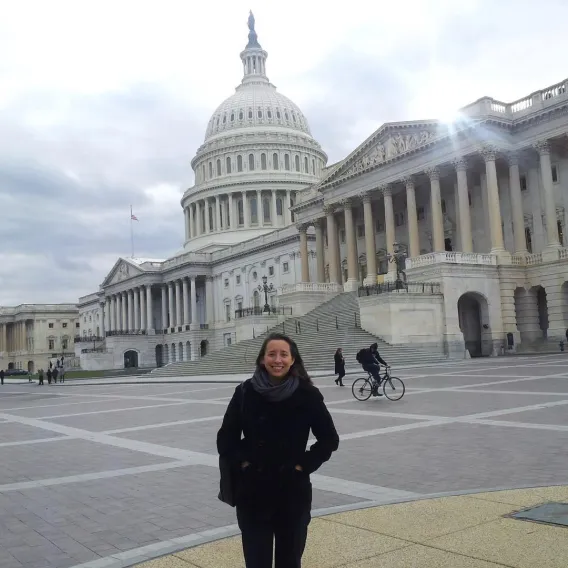
For Anne, the relationships she built during the fellowship have endured. “Stephanie and Virgil and Pete… were my dissertation committee… I still have great relationships with them. Folks that I went through the fellowship with, I still see on a regular basis.”
When asked what makes prospective fellows successful, Anne is direct. "This experience is what you make of it. So, if you're not the kind of person that takes advantage of opportunities and takes the initiative to try a bunch of things, some of which you are going to like and some of which are hard, then it's really hard to get value out of a fellowship. You got to come to it with the right attitude." She emphasizes two essentials: "Intellectual honesty and networking... plus you're building job experience."
Supporting student fellowships isn’t just about education. It’s about building a community of capable, principled leaders who carry their training into the highest levels of public policy, industry, and scholarship. As Anne put it, “The economic way of thinking is invaluable in jobs that touch policy. It’s a good gut check against the unnecessary regulations.”