Bryan Cheang’s Mercatus Fellowship Story
How Mercatus Prepared Bryan Cheang for Global Scholarship

undefinedundefined
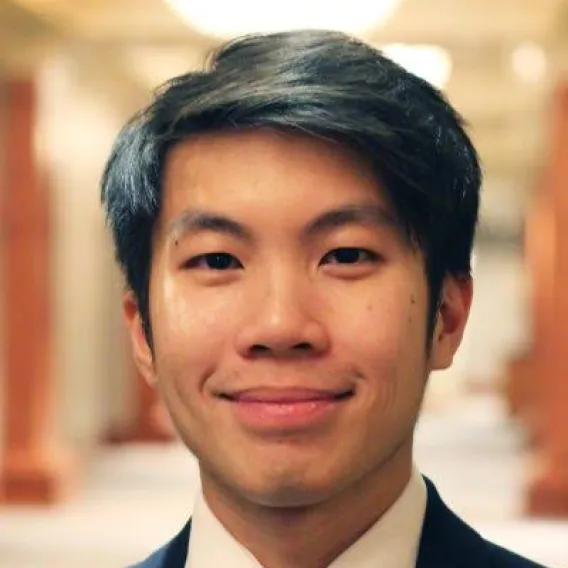
ryan Cheang discovered the Adam Smith Fellowship during his PhD studies in political economy at King's College London. Coming from Singapore, Bryan was drawn to the fellowship's interdisciplinary approach and its focus on understanding how free markets and liberal institutions work across different cultural contexts.
His research interests are the compatibility of Asian cultural values and Confucianism and its relationship to liberalism; the political economy of development in East Asia and Southeast Asia, where mainline economics ideas remain largely unapplied; and industrial policy." I grew up in Singapore" he explains. "And you know I'm very familiar with this thing called the Asian values thesis and so scholars working in political philosophy say that in East Asia you know we follow Confucianism and certain values but not this like democracy, capitalism, liberalism or even if we follow them there must be some like big modifications to it."
This is one of the few programs, in fact I don't think there's any other one, that's really exploring the institutions necessary for a free and prosperous society.
What he found at Mercatus wasn’t just a fellowship but an interdisciplinary approach to exploring "institutions necessary for a free and prosperous society."
The Adam Smith Fellowship is a one-year program that brings together doctoral students from different universities and disciplines. Through collaborative discussions with peers and leading scholars, fellows discover how market process economics, public choice theory, and institutional analysis illuminate questions about human flourishing and social change. "This is one of the few programs, in fact I don't think there's any other one, that's really exploring the institutions necessary for a free and prosperous society."

There are very few programs which are really interdisciplinary. Trying to understand how economics, politics, and philosophy interact with each other. That’s quite rare in many universities.
"I’ve always been drawn to big picture ideas" Bryan says. "And there are very few programs which are really interdisciplinary. Trying to understand how economics, politics, and philosophy interact with each other. That’s quite rare in many universities."
Mercatus brought together students and scholars from around the world into a truly open intellectual exchange. "I think the network is everything. It's probably the most important thing."
“The ideas are universal” Bryan says. “Adam Smith is Adam Smith. But how it’s applied in Japan is different from how it’s applied in France.” Meeting fellows from India, Peru, Latin America, and across Europe challenged him to think beyond academic silos.
"When you are part of the Mercatus network, you are not just reading the text, you're interacting with different scholars. And so, when you interact with different scholars, some of them are historians, some of them are economists, you start having ideas, you start thinking about how you can refine your own research based on the stuff that other people are doing."
It's the global nature of the program. [...] I think what you guys are doing is very unique in that sense. [...] Very valuable in terms of spreading global liberty.
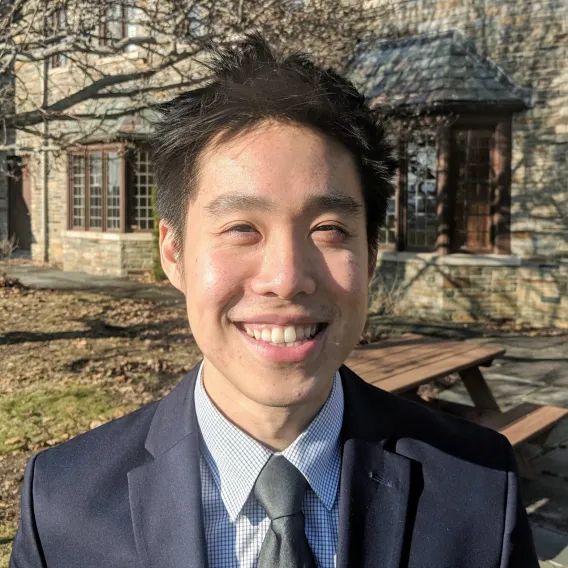
One scholar's work on the culture of markets, how culture relates to enterprise and morality, became central to Bryan's research interests. "I would say this is perhaps the main line of research. I mean everything is good, but this is perhaps the one thing that I get a lot from and because I'm interested in culture basically how markets and liberal institutions vary across cultures. You know so this one is this part is very relevant to me and I have cited you know this particular book Understanding Culture of Markets by Virgil Storr numerous times in my papers."
Mercatus also stood apart for its structure. "Being able to read the text in a systematic way. That was great" Bryan explains. He describes the fellowship discussions as "very structured and systematic" allowing him to explore political economy with clarity, discipline, and depth.
Most importantly, he says, the program is global. "I think I really mentioned this before, but it's the global nature of the program, right? Where you are not restricting it to people of a certain cultural background. You're not restricting it to people of just the United States. You make it universal, you make it multicultural, and I think that is a very appealing aspect to me. And I think it's great and that should continue."
Today, Bryan holds positions as Director and Fellow of the London School of Economics Hayek Program at STICERD, and as Senior Fellow of the Centre for the Study of Governance & Society at King's College London. "I think what you guys are doing is very unique in that sense" he says. "Very valuable in terms of spreading global liberty."