Caleb Fuller’s Mercatus Fellowship Story
How the Hayek Program Shaped Caleb Fuller: Becoming a 24-7 Economist
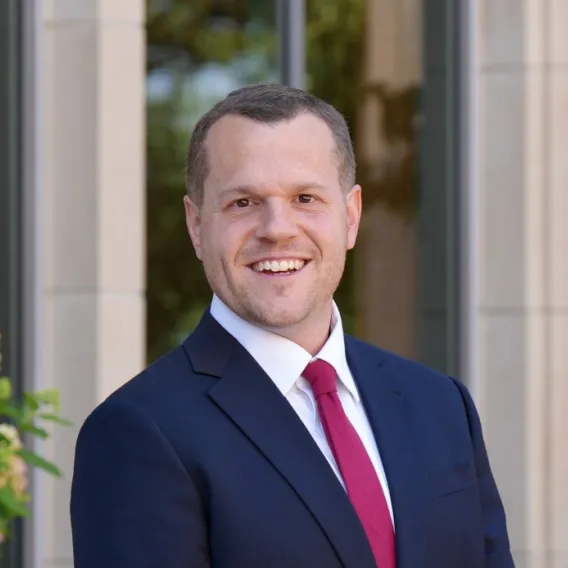

undefinedundefinedaleb Fuller's path to George Mason began at Grove City College, where he studied economics and where Pete Boettke had also been an undergraduate. "I knew about Pete Boettke's name probably from my freshman year of college," he recalls. He first planned to go to law school, but in his senior year it dawned on him that he could do what his professors were doing. "Maybe I could do what the professors that I have here are doing, for a living. I could work with these ideas that I've come to see as important. Again, I didn’t still see like the full extent and the pervasiveness of these ideas yet."
I came to realize that only GMU would really give me the opportunity to live, eat, and breathe these ideas—and to do so under the mentorship of the world’s leading experts in these paradigms.
When it came time to apply, the choice was clear. "There was just one obvious choice, which was to apply to George Mason, where I knew I could continue to work with these ideas, where I knew that my understanding of these ideas would deepen and become enriched, where my interest in these ideas would not be squashed by professors, but would actually be celebrated and supported and guided and mentored and so on; so I actually only applied to one economics PhD program." He was accepted to strategy and management programs as well, "But I came to realize that only GMU would really give me the opportunity to live, eat, and breathe these ideas—and to do so under the mentorship of the world’s leading experts in these paradigms."
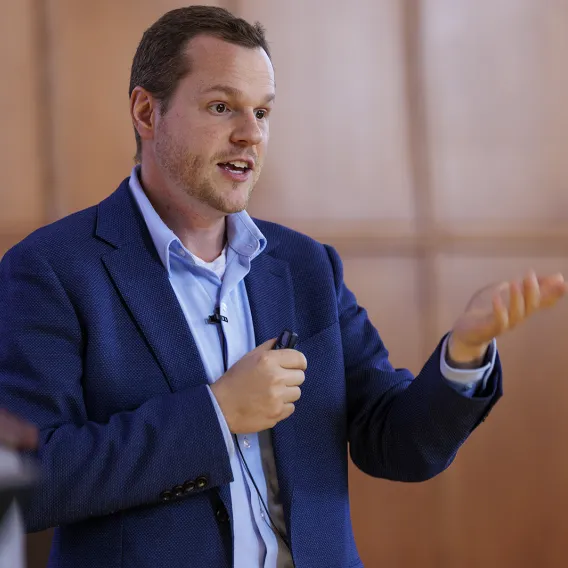
Prior to coming to George Mason, prior to entering the Mercatus Hayek Fellowship, I did not fully grasp the extent to which economics is capable of illuminating such a wide range of social phenomena.
The PhD Fellowship is a competitive, full-time fellowship program for students pursuing a doctoral degree in economics at George Mason University. PhD Fellows receive rigorous training in market process economics, public choice, and institutional analysis through advanced coursework, close faculty and scholar mentorship, and dedicated workshops and reading groups advancing the study of freedom, human flourishing, and social change.
The program changed how he understood economics. "Prior to coming to George Mason, prior to entering the Mercatus Hayek Fellowship, I did not fully grasp the extent to which economics is capable of illuminating such a wide range of social phenomena," he says. "You become a 24-7 economist when you encounter these ideas. You don't become a nine to five economist."
The professors he found in the program took him seriously from the start. "They took my ideas seriously from day one, even when those ideas were admittedly not always very good." Caleb says that treatment mattered because it told him he belonged in the conversation. "It's a real antidote to the imposter syndrome that afflicts a hundred percent of graduate students and PhDs at some point." Chris Coyne chaired his dissertation. "He's the most no nonsense kind of operator, but he makes you feel like you belong." Pete Leeson, he says, "immediately finds the good in what you can bring." Bryan Caplan, to whom he was assigned as a research assistant in his first year, modeled how much serious work scholarship requires.
His research and teaching both draw on that training. "Every single thing that I do, whether it's in the scholarly realm or in that public communication realm or in the classroom, is a direct consequence of the paradigms that I received, refined and developed when I was at the Mercatus Center." In his principles course, he asks students to explain "how it is that they can live better together with other human beings than they could if they were in autarchy." He takes the teaching problem seriously, "the burden of proof is on me to communicate to them why these ideas matter."
Every single thing that I do, whether it's in the scholarly realm or in the public communication realm or in the classroom, is a direct consequence of the paradigms that I received, refined, and developed when I was at the Mercatus Center.
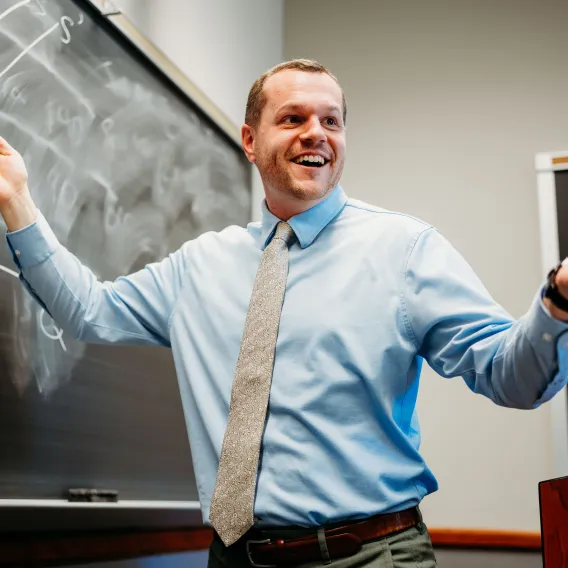
His interest in writing for the general public grew out of his admiration for Don Boudreaux at Mercatus. "I've developed this kind of significant interest in writing for the general public. And I think that I was really initially inspired by the example of Don Boudreaux at the Mercatus Center. Because in my opinion, you know, he's really the master of this kind of way of doing economics." That interest produced No Free Lunch, which grew out of a video series for Grove City College, and Mere Economics, written with Art Carden and inspired by C. S. Lewis's Mere Christianity. He also has a forthcoming book (February 2027), Trade Wars: Why Freedom Trumps Tariffs, with fellow Hayek alum, Scott Burns.
Beyond the classroom, he credits the program with a network that still shapes his work. "The most important thing that I got from my time in the Hayek program is the robust network of fellow teacher scholars who continue to inspire me on a daily basis." Among them is David Lucas, "one of my best friends to this day." "Hardly a day goes by where I'm not actually, you know, talking with one of these guys."
His advice to new fellows starts with humility. "To really try to develop intellectual humility," he says, which means recognizing that you can learn from everyone in the program. He also urges them to work in proportion to their aspirations and to live with gratitude for the opportunity. "This is just, good old-fashioned roll up your sleeves kind of advice, really be prepared to work hard or as hard as you want to work given your goals. You know, Boettke likes to say to work in proportion to your aspirations. And so, to recognize that the harder you work, the luckier you get…discard any sort of like entitlement attitude that you might have just because you got into a PhD program or something like that. Just do your best to live instead with gratitude for the opportunity that you've been given and to make the most of that through how hard it is that you work and that you apply yourself to these ideas and trying to master them."
Today, Caleb is an Associate Professor of Economics at Grove City College, where his academic career began. He notes that most Hayek Program PhDs teach at liberal arts colleges, reaching a couple hundred students a year. "I really do think that the world is a different and a better place because of the sheer scale at which the Hayek program has been able to educate PhD students and then pass that along to the world."