David Diaconu’s Mercatus Fellowship Story
How David Diaconu Discovered Confidence at Mercatus
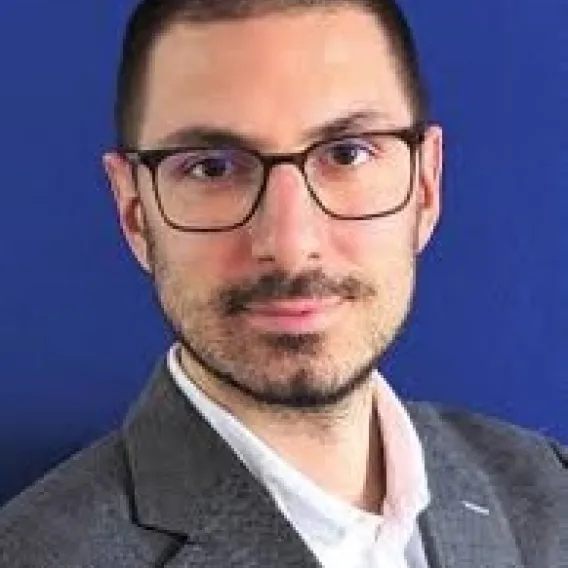

undefinedundefinedavid Diaconu grew up in Romania studying political science. His PhD supervisor Adrian Miroiu brought a new institutional framework into the field. "During my MA, PhD classes, I had the opportunity to find an institutional scholar. My PhD supervisor is one of those that brought into the Romanian context the new institutional framework within the political sciences." Through Miroiu, David learned about the work of Elinor Ostrom and others studying commons and collective action.
His research focused on the commons, specifically, on mapping Romanian commons and the institutions around them. Not just "armchair philosophy" but real fieldwork. "My work is strongly linked to spending as much time as I can on the field work." He would visit communities, discuss with locals, understand how institutions actually worked on the ground in Romanian villages. This approach to studying collective action problems set him apart, but it also left him uncertain whether his work belonged within mainline political economy.
Being in the same space all the time with the fellows and with the moderators and the keynotes and the speakers, built something into my mind, something more than just an intellectual conversation.
In 2021, having completed his PhD and started as a tenured assistant professor at the National University of Political Science and Public Administration (SNSPA), David applied for the James Buchanan Fellowship. He was looking for that intellectual curiosity "I think meeting some other guys that are in a way similar to myself. I think the type of networking and connection and intellectual connection between me and similar peers."
The James Buchanan Fellowship is a one-year program for scholars in any discipline who have recently graduated from their doctoral programs. Fellows explore ideas in the political economy of Adam Smith and the Austrian, Virginia, and Bloomington schools of political economy through reading and discussion colloquia.
The colloquia were, in his word, "intense." Six to eight hours of close discussion with other fellows, moderators, keynote speakers, all in the same space day after day. "Being in the same space all the time with the fellows and with the moderators and the keynotes and the speakers, built something into my mind, something more than just an intellectual conversation."
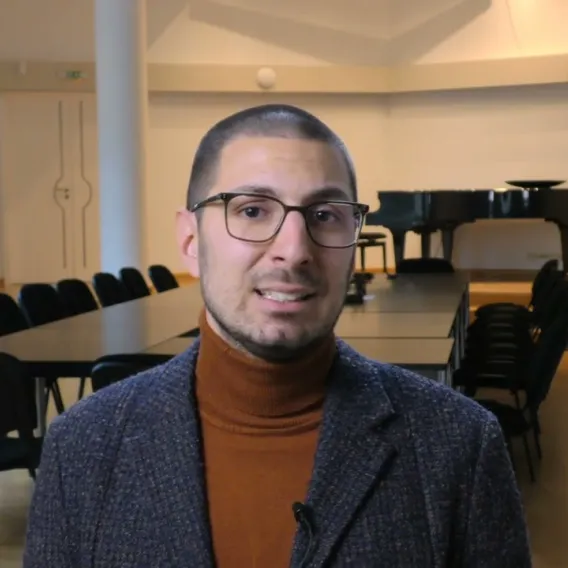
Reading [...] in the workshop, in the colloquia, gave me, in a way, a better understanding or a better feeling about how the work is going in that type of literature.
But what struck David most was how interdisciplinary his cohort was, which included economists, political scientists, and someone from communication and literature studies. "Each of us brought into the discussion their perspective through their eyeglasses. So, each of us had its own perspective and that's the, I think, the most relevant point of the colloquia, being a platform for the discussions between quite decent or quite relevant intellectuals, early scholars, intellectuals at our age, about the topics that are quite classic."
"Although I brought into the discussion at some point something from my work that was from a remote village in Romania that was not a case study that was so relevant for the topic, but the others were all ears and start to ask about that topic." The environment encouraged curiosity, respected each person's work, and created what he calls "a kind intellectual world around some topic."
His mentors at Mercatus became crucial. Paul Dragos Aligica, who had been part of his PhD defense committee years before, now became a formal mentor. "In a way, the links, intellectual links that we had, I can say that he mentored me in this way and in a way looked after me, starting from 2019 when I was there for the first time and keeping in touch with him."
The fellowship deepened his understanding of his own work. He had read Ostrom before. He understood her framework intellectually. But reading Ostrom in the Buchanan colloquia, discussing her ideas with scholars who had dedicated their careers to commons research, hearing how her work connected to Buchanan's insights on public choice and Hayek's ideas about distributed knowledge transformed something in him. "Reading them in the workshop, in the colloquia, gave me, in a way, a better understanding or a better feeling about how the work is going in that type of literature."
Being part of the Buchanan Fellowship [...] transformed me into someone that is confident enough to develop a discussion on something that I was thinking I was far away from being the best in.
Although the most transformative outcome came when David returned to Bucharest and brought the Mercatus experience home.
His dean asked him why not organize a meeting in Romania with scholars working on similar ideas? David thought about what had happened at Mercatus. He thought about his fellowship cohort. "If I will organize, if I will try to organize something in Romania...if I can discuss about the same topic on our work from different perspectives." He decided on a theme: mainline political economy, focused on Ostrom, Buchanan, and Hayek.
He reached out to his fellowship colleagues and Mercatus scholars. With support from his university, David organized the first Bucharest Workshop on Mainline Political Economy in 2025, and being a success, a second workshop took place in June of 2026.
"There was not a panel that ended on time. There were more questions. And we had three hour panels for three papers. And there was plenty of very, very nice discussions." Colleagues told him they wanted to do it again in following years. It exceeded what he'd imagined.
For David, it was proof that what he'd experienced at Mercatus, the serious, kind, intense intellectual engagement, was valuable enough to export, to share in his own context. "So it was built on the intellectual platform and on the ties that got stronger within the fellowship program."
"Being part of the Buchanan Fellowship...didn't transform me into an expert of course, but it transformed me into someone that is confident enough to develop a discussion on something that I was thinking I was far away from being the best in."