Laura Grube’s Mercatus Fellowship Story
Bridging Ideas and Action: How a Mercatus Fellowship Opened Doors for Laura Grube


undefinedundefinedaura Grube took a bold gamble when she applied to graduate school: she applied to only one program; the George Mason University PhD in economics. After working at the Free Market Foundation in South Africa and spending two years in business consulting, she knew exactly what she wanted. "I knew that the scholars that were there, the faculty there, were interested in the big questions and also questions that are related to policy," she recalls. Today, as a professor at Beloit College leading the Upton Forum and teaching entrepreneurship and civic leadership, Laura credits her Mercatus fellowship experience with preparing her to bridge rigorous scholarship with real-world impact.
Her path to graduate school was anything but conventional. That instinct to focus solely on George Mason proved right. At Mercatus, Laura found an intellectual community that didn't separate theory from the real world. "People doing research that matters, right? People doing research that bridges the gap, policy work, communicating ideas," she says. She wasn't just learning economics in the abstract. She was preparing to apply it.
People doing research that matters, right? People doing research that bridges the gap, policy work, communicating ideas.
The PhD Fellowship is a competitive, full-time fellowship program for students pursuing a doctoral degree in economics at George Mason University. PhD Fellows receive rigorous training in market process economics, public choice, and institutional analysis through advanced coursework, close faculty and scholar mentorship, and dedicated workshops and reading groups advancing the study of freedom, human flourishing, and social change.
Through Mercatus's support, Laura gained hands-on experience in research that addressed real-world challenges. She worked closely with Virgil Storr, producing several co-authored papers, and pursued fieldwork in post-disaster environments. First after Hurricane Katrina and later after Superstorm Sandy. "It was really this incredible intellectual community that extended well beyond the classroom," she says.
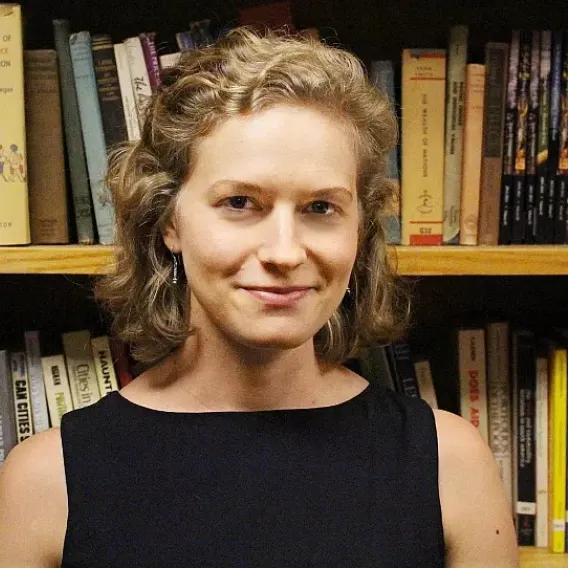
Students graduate with at least one, in many cases several publications, which really give them a leg up in the job market.
 That experience deeply shaped Laura's long-term research agenda. Her dissertation focused on how communities solve collective action problems after disasters. A study of entrepreneurship and social coordination without central planners. Today, that work continues as she explores how entrepreneurship and innovation affect local governance and economic resilience, applying the same principles she began developing during her Mercatus years.
Mercatus also opened doors beyond research. Laura speaks candidly about how the fellowship experience created meaningful connections and opportunities. "I think the PhD program opened a lot of doors for me," she says. "It's a program that is well respected. Students graduate with at least one, in many cases several publications, which really give them a leg up in the job market."
You're part of a brand that has a reputation that extends so far.
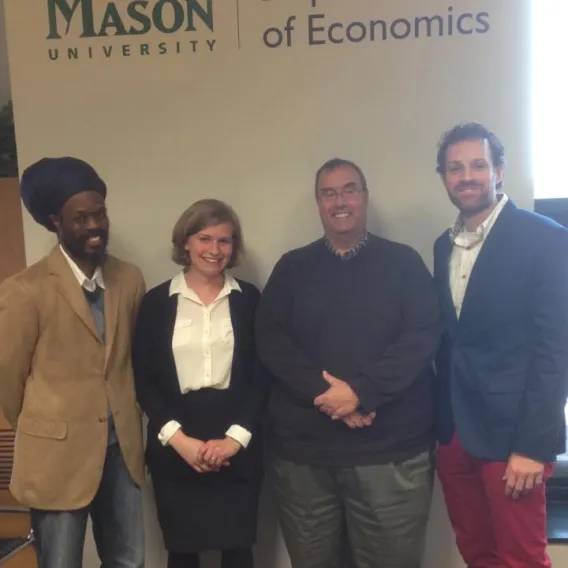
But it wasn't just about publications. It was about joining a network of scholars and institutions committed to serious inquiry. "You're part of a brand that has a reputation that extends so far," she explains. "People that know of Mercatus and know of the ideas…it's hard to understand when you have just graduated the program, what kind of value add that will bring."
Today, as a professor at Beloit College, Laura teaches entrepreneurship, comparative economic systems, and civic leadership. She leads the Upton Forum, bringing prominent scholars to campus and challenging students to think critically about markets, governance, and society. In her research, teaching, and community work, she embodies the vision of bridging rigorous ideas with real-world action.