Lillian Foos’ Mercatus Fellowship Story
How Mercatus Gave Lillian Foos Confidence to Make a Difference
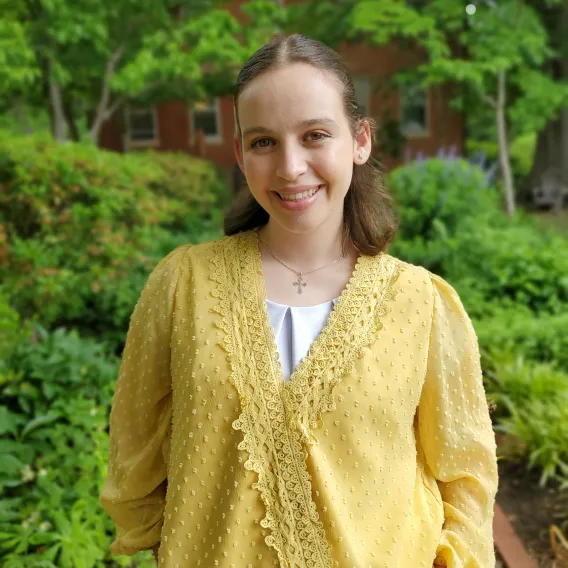

undefinedundefinedillian Foos always knew she wanted to be a teacher. Her father is a high school economics teacher, so she grew up with a strong economics background which has shaped the way she understands the world and education policy. "Education is all about incentive structures and cost benefit analysis. These are themes that I learned in my high school economics class from my dad. And so that really just taught me that the world, the whole world is about incentives and how people respond to different things in their environment."
It was really, really fun to get those books and have the opportunity to discuss them with scholars who knew what they were talking about...to really have those deep discussions and understanding not just what we're studying, but why we're studying it and then applying it to other places.
When her dad suggested she apply to the Mercatus high school fellowship in 10th grade, she wasn't sure what to expect but applied anyway just to see what it was.
The Exploring Complex Solutions fellowship is designed for high school students interested in political economy. The online format makes it accessible to students worldwide, creating a community of peers exploring foundational economic ideas together.
"The next three years were just such a joy. It was really, really fun to get those books and have the opportunity to discuss them with scholars who knew what they were talking about...to really have those deep discussions and understanding not just what we're studying, but why we're studying it and then applying it to other places."
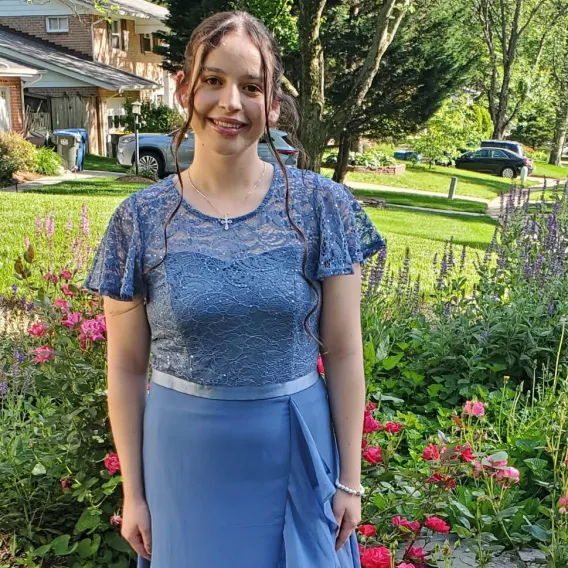
Most of the time the answer is talk to people who are actually experiencing the problem...talk to entrepreneurs, talk to people who run organizations that are in the community and figure out what they actually need.
One book in particular shaped her thinking, Chris Coyne's Doing Bad by Doing Good. She read it multiple times "maybe for every year of the fellowship that I've done".
"I really want to do good. And so just the title Doing Bad by Doing Good is something that really stuck out to me that even though my intentions are good, even though I want to help people and I'm doing something that putting money towards a program or something that I think will help people, it doesn't always do what we intend it to do."
The book taught her not to assume you know what people need. Talk to them. Listen to entrepreneurs and people experiencing the problem. Understand their context before implementing top-down solutions. "Most of the time the answer is talk to people who are actually experiencing the problem and not doing something that we see this problem over there. We're going to send money or send resources that we think will probably help. But actually to go into the area that's experiencing that problem and talk to entrepreneurs, talk to people who are experiencing it, talk to people who run organizations that are in the community and figure out what they actually need."
Policy changes that come from teachers and communities working on actual problems prove more effective than mandates from above. "When change comes from the bottom and spreads up, it is a lot more effective because it's close to the actual problem and people problem solving and coming up with solutions that work for the smallest group and then expanding that up and making alterations where necessary is a lot more effective than coming up with a policy at the very top and then forcing everyone to do it."
Through discussion boards and Zoom calls with fellows from around the world, she developed her communication skills. "Just that skill of recognizing where the conversation is going and recognizing how I can make the conversation move forward is something that I learned a lot about...Maybe just asking a question of someone else is what's really going to help the conversation."
Lillian's advice to high schoolers considering the fellowship: "Don't let that be your maximum. Let it be your minimum and just engage as much as you can in the module."
Everything is about the individual. And because it's all about helping individuals, it means that me as an individual, I can make a difference. Something really valuable the fellowship has taught me is that I can make a difference.
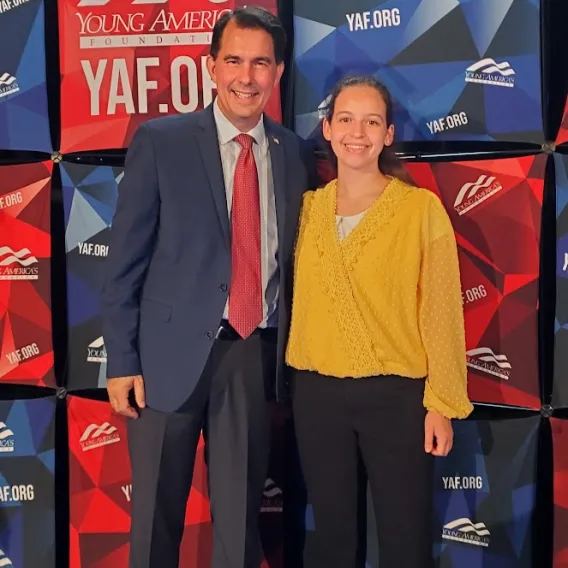
After finishing high school, Lillian applied to the Don Lavoie Fellowship as a college freshman at Grove City College, where she is pursuing a BS in Special and Elementary Education.
The Don Lavoie Fellowship is an online, semester-long program for undergraduate students, recent graduates and young professionals considering graduate school, and early-stage graduate students interested in political economy. Through online discussions with peers and scholars, fellows explore key ideas in the Austrian, Virginia, and Bloomington schools of political economy and discover how to apply these frameworks to academic and policy research.
"I definitely felt out of my league. And I think some people maybe applying to the Mercatus fellowships may feel, you know, I'm just not cut out for this...But recognizing that I still have a unique perspective to provide and that I'm coming in with strengths just like everyone else is coming in with strengths was really helpful to shift my perspective."
The fellowship doesn't just teach ideas. It teaches a way of seeing the world. Lillian is entering the education field with foundational economics knowledge and, more importantly, with the confidence that she can make a difference. "Everything is about the individual. And so, because it's all about helping individuals, it means that me as an individual, I can make a difference. And so, something really valuable that the fellowship has taught me is just that I can make a difference."