Malte Dold’s Mercatus Fellowship Story
Bridging Disciplines: How Interdisciplinary Conversations at Mercatus Helped Malte Dold Forge a Unique Academic Path
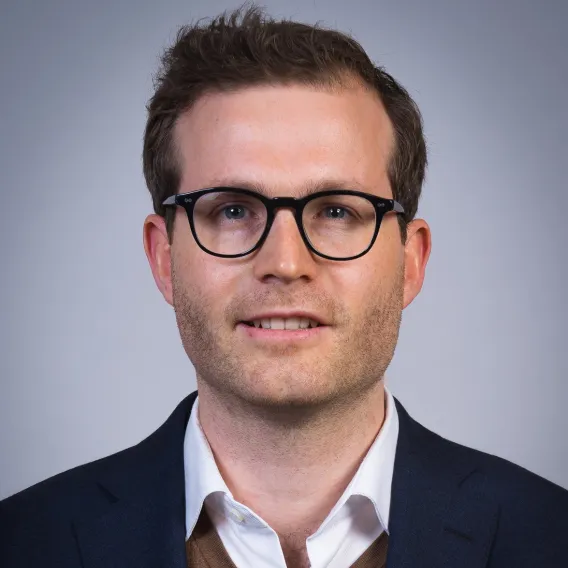

undefinedundefinedhen Malte Dold was in the middle of a semester at NYU, visiting from his PhD program in Germany, his mentor Mario Rizzo offered some advice: "Why don't you apply to this fellowship down in DC? That's a great thing. You will read interesting texts and it will be conducive to your interests because they are sort of at the intersection of philosophy and economics." That recommendation changed everything. Today, as Associate Professor of Economics at Pomona College, Malte teaches both economics and in the Philosophy, Politics, and Economics (PPE) program, drawing on the interdisciplinary foundation he built through the Adam Smith Fellowship. A fellowship he credits with giving him the courage and community to pursue unconventional research bridging economics, philosophy, and psychology.
For Malte Dold, the Adam Smith Fellowship was more than an academic opportunity. The intersection where economics meets ethics and human behavior has always been central to his work. As a student, he wasn't drawn to abstract theory alone, but to real-life tensions between self-interest and social responsibility. "I was very interested in what are some of the questions that we might have in the context of social responsibility of corporations, not just on the corporate level, but then also on a wider institutional level," he explains.
For the first time I could see, there is actually a path where I can stay within academia and do things that I’m passionate about, but that are not the typical mainstream approach.
The Adam Smith Fellowship is a one-year program that brings together doctoral students from different universities and disciplines. Through collaborative discussions with peers and leading scholars, fellows discover how market process economics, public choice theory, and institutional analysis can shed light on questions about human flourishing and social change. Fellows participate in discussions exploring the Austrian, Virginia, and Bloomington schools of political economy, diving into the works of thinkers like Adam Smith, F.A. Hayek, James Buchanan, and Elinor Ostrom.
For Malte, the fellowship conversations weren't just intellectually stimulating but career-defining. "For the first time I could see, there is actually a path where I can stay within academia and do things that I'm passionate about, but that are not the typical mainstream approach," he shares.
The fellowship made me much more confident in using [...] the history of economics angle to teach about ideas.
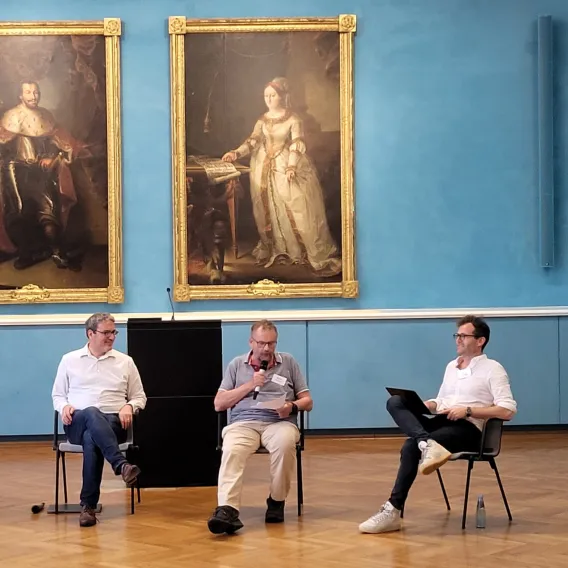
One of the most impactful aspects of the fellowship was the people. During one of the colloquia in London, he connected with Paul Lewis from King's College. "I'm in close contact with Paul Lewis [who] became a co-author of mine," Malte says. "We now have two papers together or even three. So, it really was quite fruitful, that collaboration."
The fellowship also opened doors in the U.S. academic market. While transitioning from Europe, Malte was encouraged to explore liberal arts colleges for their openness to interdisciplinary teaching. That path led him to his current position as an Associate Professor at Pomona College. "The fellowship made me much more confident in using also the history of economics angle to teach about ideas," he says.
This network character is so important because so many young folks are struggling because they don’t know how to navigate that landscape. And I think that the program helped to do that.
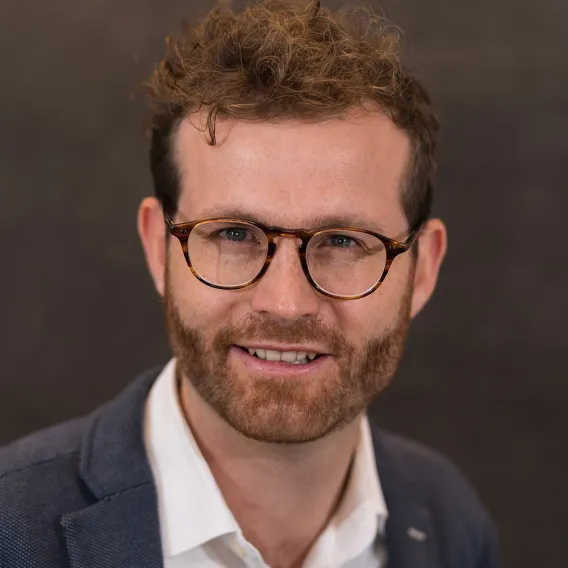
On the research side, the impact is just as clear. "I'm currently working on a little book for the Cambridge series on Austrian economics that Pete Boettke is editing," Malte shares. He's also writing about Hayekian psychological economics, work directly inspired by readings and conversations from his fellowship years.
But the biggest takeaway for Malte was the sense of community and support. "Early on in your intellectual journey, to find a support network. I think it's so essential," he says. "The academic path is a marathon, and it's easy to just run out of gas because you just don't feel supported along the path. And I think just this network character is so important because so many young folks are struggling because they don't know how to navigate that landscape. And I think that the program helped to do that."