Malte Hendrickx's Mercatus Fellowship Story
From German Philosophy to Moral Psychology: How the Bastiat and Smith Fellowships Shaped Malte Hendrickx's Interdisciplinary Path

undefinedundefined
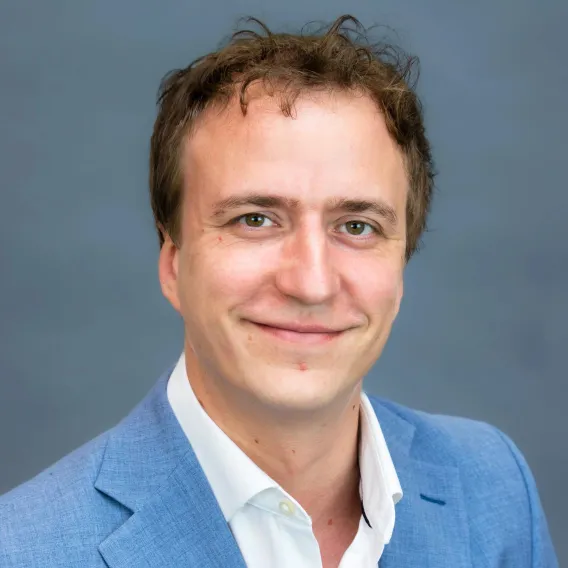
alte's path to classical liberal thinking was unconventional. "Yeah, so I’m not from an academic family or anything like my dad's a nurse, my mom's used to work as a librarian, both are retired now. I went to study philosophy and economics in my undergrad in Mannheim in Germany and I really enjoyed both subjects, but I was like new to university, everything was like, very confusing and somewhat tricky, especially since I had to work quite a bunch during my undergrad."
It kind of makes it much more fun to do research because you get to talk to a lot of different people who are all excited about very different stuff.
Like many first-year university students, he struggled. "First semester I was like, my God, I'm free. I don't live at home. I can go to the disco until 4 a.m. What a time to be alive. So horrible grades." He gradually found his footing, eventually realizing that while he loved both subjects, his comparative advantage wasn't in the high mathematical modeling that economics demanded. "What kind of changed it was when I realized interdisciplinary research would be like an avenue I could pursue."
Rather than competing in a crowded field of classical scholars, he could go to neuroscientists and psychologists and ask them what they'd discovered. He could take their latest findings; the recent papers everyone was discussing and bring them back to philosophy with fresh questions. In a field where most conversations had been happening for millennia, he could be among the first philosophers engaging with brand new empirical discoveries. That was a comparative advantage. That was a way forward. "And that gives you like a really valuable kind of thing as a philosopher, because you're like, look, here's a thing that matters for like, philosophical questions, so in my case that's like insights about motivation, about effort, about difficulty, about which actions we decide to take. And then you go to the philosophy department, and you say, look guys, here's what these people have found that has really interesting implications. And because those implications fall from something that's like a relatively recent discovery, there's not like, you know, 2000 years of monks in monasteries in Germany who've already worked on it. Rather you'd be one of the few people who know about this in the specific philosophy discipline. That makes it much easier for me to do research and it kind of makes it much more fun to do research because you get to talk to a lot of different people who are all excited about very different stuff."
I think there's few places as good as Mercatus at getting like a genuine diversity of viewpoints.
Toward the end of his master's program in philosophy and cognitive science from Tübingen Malte found out about Mercatus. "And then towards the end of that, someone I met through that scholarship, the scholarship was like a German liberal organization scholarship, introduced me to Mercatus and was like, man, Malte, I think you would really like these people and you really like these events, you should apply. " Malte applied for the Frédéric Bastiat Fellowship. It was his first time visiting the United States, and it opened a world he hadn't imagined.
The Frédéric Bastiat Fellowship is a one-year program bringing together graduate students from different universities and disciplines to explore how Austrian, Virginia, and Bloomington schools of political economy apply to contemporary policy questions. The Adam Smith Fellowship, which Malte later pursued while in his PhD program, is a one-year program that brings together doctoral students from different universities and disciplines. Through collaborative discussions with peers and leading scholars, fellows discover how market process economics, public choice theory, and institutional analysis can shed light on questions about human flourishing and social change.
When Malte began his PhD at University of Michigan, already working on questions of motivation and decision-making, he applied for the Adam Smith Fellowship. "This was like, I would say, somewhat midway through my PhD. So, it already started working on my dissertation, all that kind of motivation decision making stuff. And that made it kind of especially fun and fruitful for me." His dissertation chapters on effort, on difficulty, on moral burnout all centered on how psychological mechanisms of motivation could inform ethical questions about sustained commitment to difficult goals.
Everyone that's interested in understanding how society works and what are the biggest challenges probably holding society from achieving its full potential should definitely consider applying.

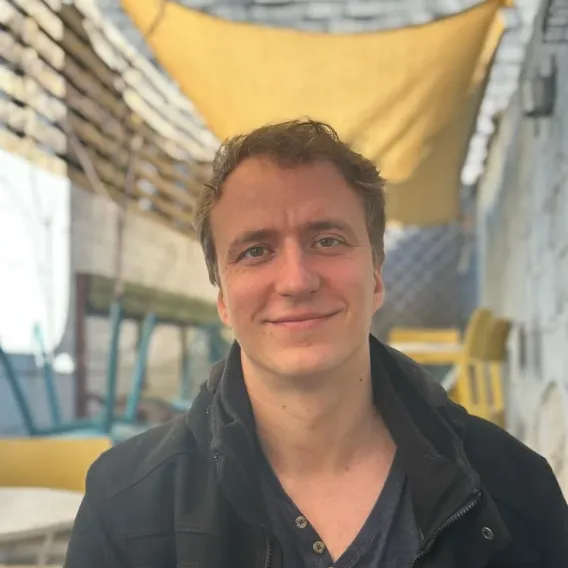
Beyond the research what Malte treasures most is the intellectual diversity. Coming to the US nervous about "indoctrinated" classical liberals reading Adam Smith and "the art of making a deal," he was pleasantly shocked. "I think there's few places as good as Mercatus at getting like a genuine diversity of viewpoints. Where like I would talk at Mercatus events with like, you know, a very passionate socialist...And like super conservative, you know, Catholic, Italian, like, you know, I'm not sure about this whole marriage business kind of dude. And they'd be in the same room and having an open discussion. And that would be genuinely fun because you don't get that in many academic contexts."
This experience of genuine interdisciplinary engagement transformed how he could communicate. "So, one thing that I think I learned to be much better at is talking without the jargony stuff, boiling down stuff to its components in a way where I can describe like even a relatively intricate philosophical position in a way that my hairdresser would find exciting."
Malte's journey from a German student finding interdisciplinary research, publishing dissertation chapters on effort and moral burnout, to winning teaching prizes for making philosophy accessible to non-philosophers, illustrates how Mercatus fellowships don't just transmit ideas; they create environments where students are encouraged to find their distinctive voice.