Megan Jenkins’ Mercatus Fellowship Story
From Intentions to Outcomes: How the Frédéric Bastiat Fellowship Helped Megan Jenkins Bridge Theory and Policy Practice


undefinedundefined
hen Megan Jenkins began her undergraduate research project on the Endangered Species Act at Utah State University, she imagined a career in Foreign Service focused on international relations and environmental protection. But her analysis of Trinity County, California, changed everything. She discovered how well-meaning regulation led to unintended economic devastation in the local community. "That experience opened my eyes to thinking critically about policy," she explains.
That early lesson about the gap between policy intentions and outcomes sparked a shift in her career trajectory. Today, as Strategic Research Director at the Pacific Legal Foundation, Megan credits the Frédéric Bastiat Fellowship with giving her the interdisciplinary framework and professional network she needed to bridge economic theory with real-world policy challenges.
All viewpoints were welcome. [...] Everyone was welcome to learn and bring new ideas and disagree.
Megan's journey led her to pursue a master's in economics, during which she was selected for the Bastiat Fellowship. She was drawn to the fellowship for its interdisciplinary lens, vibrant network, and opportunities to explore policy areas outside her expertise.
The Frédéric Bastiat Fellowship is a one-year program that brings together graduate students from different universities and disciplines, including economics, law, political science, and public policy. Through collaborative discussions with peers and Mercatus scholars, fellows explore how the Austrian, Virginia, and Bloomington schools of political economy provide foundations for contemporary policy analysis and apply to real-world challenges like entrepreneurship, technological innovation, regulation, public health, and fiscal policy.

I think it really helped me to build some more D.C. based connection, and those have been extremely helpful as I’ve gone through my career.
The Bastiat Fellowship connected Megan with leading scholars and aspiring researchers in a supportive, intellectually rigorous environment. She remembers the cohort as "vibrant and welcoming," with a culture of open discourse. "All viewpoints were welcome. No question was too silly. Everyone was welcome to learn and bring new ideas and disagree. And I really, really valued that about it,” she shares. The conversations were both intellectually stimulating and empowering, particularly for someone from outside the D.C. policy ecosystem. “Being from Utah and not located physically in the D.C. area, I think it really helped me to build some more D.C. based connection, and those have been extremely helpful as I’ve gone through my career since the Bastiat Fellowship.”
A strong theme throughout Megan's journey is mentorship and connection. She continues to collaborate with Jordan Lofthouse, a Mercatus scholar and close friend. Together, they co-authored "The Reality of American Energy," among other publications, a testament to the ongoing influence of Mercatus in her professional life.
Just reinforcing the comfort backbone of right public choice theory and the writing of Elinor Ostrom and Austrian economics [...] I think kind of gives you a superpower that allows you to be a good researcher and to be someone who is a critical thinker.
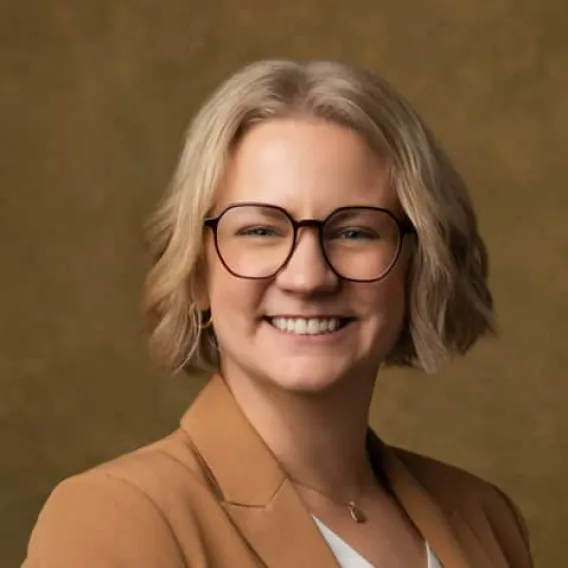
Megan is also passionate about supporting future scholars and maintaining her network. “Being proactive about those opportunities, like go over the participant list and see who’s coming and set up meetings with them ahead of time.” she advises. She even keeps a personal list of women who inspire her, making sure to stay connected with them throughout her career.
Today, Megan draws heavily on the framework she developed through the fellowship. She oversees research on pressing issues like housing policy and civil liberties, leveraging tools from public choice theory, Austrian economics, and institutional analysis. “Just reinforcing the comfort backbone of right public choice theory and the writing of Elinor Ostrom and Austrian economics…having them always running in the background… I think kind of gives you a superpower that allows you to be a good researcher and to be someone who is a critical thinker.” The fellowship, she notes, helps with “being comfortable with approaching new policy areas and being open to learning and diving in and becoming an expert.”