Nicholas Orlando’s Mercatus Fellowship Story
From International Affairs to Applied Political Economy
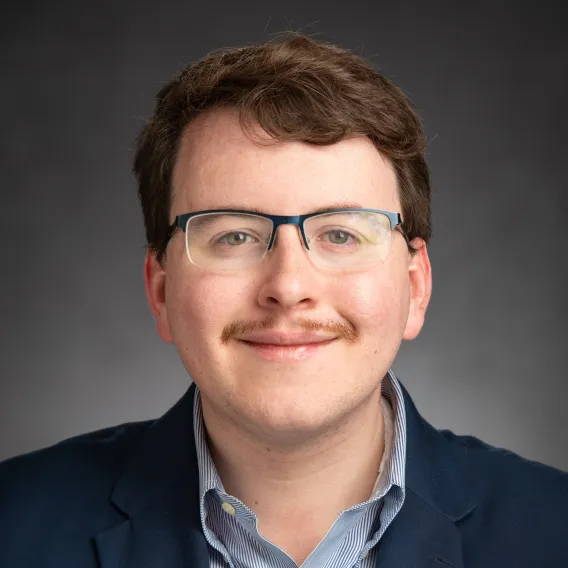

undefinedundefinedhen Nicholas Orlando arrived at George Mason University as an undergraduate, he came with a passion for international affairs but a class on classical economics would reshape his entire intellectual framework. “When I was an undergrad at Mason, I was not an economics major. I was an economics minor at Mason. I was an international affairs major, or I guess you would call it global affairs major at the time. And, I had my introduction to economics econ 103 at Mason. And that's kind of how It kind of installed a bit of a more classical liberal bent into me,” he recalls.
When I was an undergrad at Mason, I learned a lot about Hayek. And of course, my time at Mercatus really solidified that with Elinor Ostrom and all the other big figures there.
The fellowships gave Nicholas the tools to discover his research interests “I guess my personal interests are pretty much anything with an application to spontaneous order. I'm fascinated by how norms and actions emerge in society. When I was an undergrad at Mason, I learned a lot about Hayek. And of course, my time at Mercatus really solidified that with Elinor Ostrom and all the other big figures there. We look and we see people solving things without some higher authority directing them basically”.
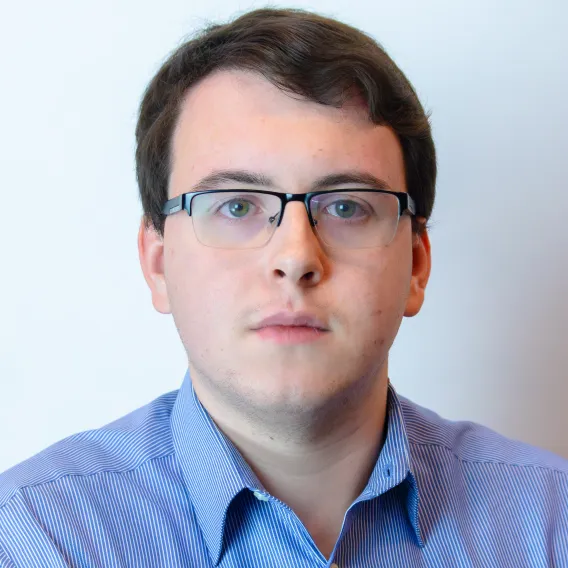
I wanted to continue my relationship with the center and the ideas that it had implanted in me, even though I was going out to grad school at a different program...I wanted to keep on exploring these ideas, and also, I wanted to network with other people who were interested in these ideas.
Nicholas first encountered the Mercatus Center through the Undergraduate Scholars Program, designed for undergraduates at George Mason University interested in learning about political economy. Through regular discussion sessions during the academic year, fellows explore foundational ideas in the Austrian, Bloomington, and Virginia schools of political economy. His decision to join came after an internship at the US Department of State during the COVID-19 pandemic. "After kind of witnessing all that, I decided to kind of explore a little more of this classical liberal side of me," he explains. "So that's why I ended up becoming a part of the undergrad fellowship."
When Nicholas moved to the University of Pittsburgh to pursue a master’s in public and international Affairs he encountered a mainstream international affairs program with fundamentally different assumptions about the role of the state. "I wanted to continue my relationship with the center and the ideas that it had implanted in me, even though I was going out to grad school at a different program," he explains. "I wanted to keep on exploring these ideas, and also, I wanted to network with other people who were interested in these ideas."
This commitment led him to pursue both the Don Lavoie Fellowship and the Frédéric Bastiat Fellowship while completing his master's degree. The Don Lavoie Fellowship, an online, semester-long program for early-stage graduate students interested in political economy, allowed Nicholas to engage with peers and scholars worldwide while exploring how to apply Austrian, Virginia, and Bloomington school frameworks to academic and policy research. The Frédéric Bastiat Fellowship was a one-year program that explored the same intellectual traditions bringing together graduate students from different universities and disciplines; economics, law, political science, and public policy.
You'll be a much more well-rounded scholar or well-rounded policy official, if you understand certain concepts about spontaneous order, polycentricity, or just the way politics should work versus how it actually works.
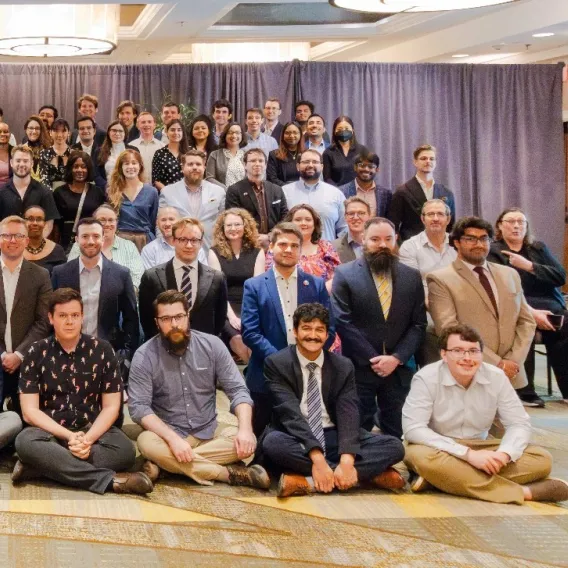
That intellectual foundation proved invaluable as Nicholas launched his career in state-level policy. Now a days Nicholas is a Research Specialist at the Sheila and Robert Challey Institute for Global Innovation and Growth at North Dakota State University where he investigates how economic freedom impacts pro-social behavior, comparing states to see whether economic liberty correlates with citizens' willingness to help their neighbors, both formally and informally. "There's been an interest in seeing how economic freedom impacts, I guess pro-social behavior, like how does it impact attitudes towards minorities? How does it impact attitudes towards other people?" The concepts he learned in the fellowships, spontaneous order, polycentricity, and the power of decentralized solutions are essential elements in his work.
The habits the fellowship built have followed him into his career. "I'm known as kind of just the book guy where I am…the person who just reads a lot." He credits the program for that discipline "The fellowship, you know, encourages you to really read and understand a lot of stuff."
For Nicholas, the value of the Mercatus fellowships lies precisely in their ability to expose students to ideas rarely encountered in conventional academic programs. "You'll kind of be exposed to some unique ideas that you probably won't get within your conventional program," he advises prospective fellows. "You'll be a much more well-rounded scholar or well-rounded policy official, if you understand certain concepts about spontaneous order, polycentricity, or just the way politics should work versus how it actually works."