Nick Cowen's Mercatus Fellowship Story
Nick Cowen: How One Fellowship Shaped an Academic Career


undefinedundefined
ick Cowen first heard about the Adam Smith Fellowship early in his PhD at King's College London. Nigel Ashford, a key node in the world of liberal academia, encouraged him to attend an IHS conference. "That was in 2013," Nick recalls, "and it was where I first met faculty from George Mason University and the people behind the Mercatus program."
The Adam Smith Fellowship is a year-long program that brings together doctoral students from different universities and disciplines. Through seminars with peers and leading scholars, fellows explore how market process economics, public choice theory, and institutional analysis shed light on human flourishing and social change.
My training in philosophy and political theory had prepared me for some of the questions [...] but the economics was new to me. I was learning a great deal and learning it in a way I could not have done within my own discipline.
Nick arrived expecting to study Hayek, Austrian economics, and Virginia School public choice, and the program delivered. "My training in philosophy and political theory had prepared me for some of the questions," he says, "but the economics was new to me. I was learning a great deal and learning it in a way I could not have done within my own discipline."
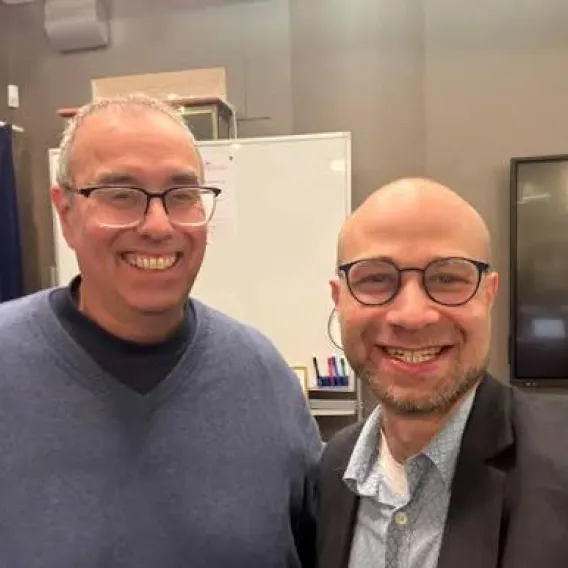
My peers were establishing themselves in their fields at a very early stage, showing that they would be good colleagues and productive researchers. That was a bit of a shock, and it changed how I approached my PhD when I returned to England.
The biggest surprise was his peers rather than the syllabus. "I met scholars such as Peter Boettke, Chris Coyne, Peter Leeson, and Virgil Storr, who have all gone on to be enormously influential. But what struck me most was the ambition and work ethic of my American peers."
One fellow in particular, Brian Kogelmann, stood out. "He, and really everyone in that cohort, set aside several hours every day for writing. They worked on the principle that the PhD is a kind of coursework: something to get done, which provides raw material for a career but is not the career itself. That was very different from the advice I was getting in the United Kingdom."
The lesson was clear: make yourself visible. "My peers were establishing themselves in their fields at a very early stage, showing that they would be good colleagues and productive researchers. That was a bit of a shock, and it changed how I approached my PhD when I returned to England."
Nick started thinking about journals and publication targets. When the fellowship arranged for him to visit Brown University's Political Theory Project, he made the most of it. "My first paper was effectively written during those couple of months at Brown, and the Smith program made the visit possible by covering my travel." Later that year, the paper was accepted by the American Journal of Political Science. "Without the feedback I got on the fellowship, and the conversations at Brown that it led to, I wouldn't have known how to take material from my master's thesis, condense it into a manuscript, and get it into one of the top political science journals in the world."
The Smith Fellowship showed me what it takes to build a research career. Without it, I don't think I would have published enough to get a postdoc, let alone a permanent post in a very competitive job market. Now I get to teach several hundred students every week.
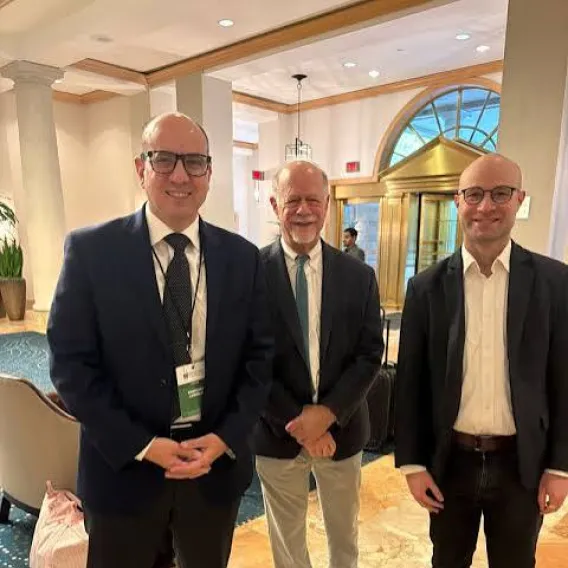
The fellowship also shaped his research agenda. His doctoral thesis, later published as the book Neoliberal Social Justice, engages closely with the thinkers at the heart of the program. "The book brings together Hayek and Austrian market process economics, James Buchanan and Virginia political economy, and, to a lesser extent, Elinor Ostrom and the Bloomington School. I argue that egalitarian moral commitments, including those of John Rawls, are compatible with classical liberal institutions. You don't have to give up on social justice to endorse a market order."
The network he built through Mercatus is still important to his work. "When you become known through programs like this, people at places like Mercatus can vouch for you. They can say that you're hardworking and that you're making a real scholarly contribution. That opens up collaborations with people who might otherwise only know you from a distance."
Nick is now Associate Professor at the University of Lincoln, where his research ranges across political philosophy, institutional economics, and empirical criminology. He credits the fellowship with setting that course. "The Smith Fellowship showed me what it takes to build a research career. Without it, I don't think I would have published enough to get a postdoc, let alone a permanent post in a very competitive job market. Now I get to teach several hundred students every week."