Olivia Galloway's Mercatus Fellowship Story
From Graphic Design to Economic Development: How the Frédéric Bastiat Fellowship Shaped Olivia Galloway's Research

undefinedundefined
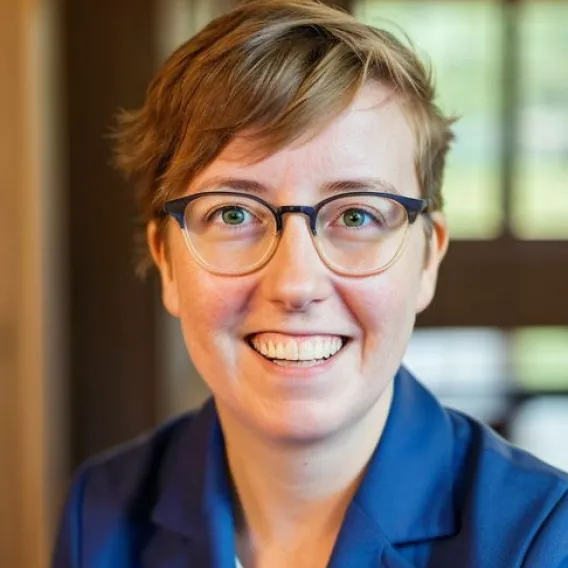
hen Olivia Galloway first interned at the Mercatus Center as a George Mason University senior, she had already gone through an interesting academic path, starting as a graphic design major in community college, discovering business, and eventually transferring to Mason for economics. Working at Mercatus for five years after graduation, she found herself drawn to research that didn't just "sit on a shelf," but had real policy impact. When she left Mercatus to work in more applied government roles, the Frédéric Bastiat Fellowship became her way to stay connected to deep intellectual inquiry while pursuing practical work.
Today, having just completed her PhD with dissertation research on Sundown Towns, examining how historical exclusion shaped long-term economic trajectories, Olivia credits the Bastiat Fellowship, particularly its research sequences, with helping her discover what kind of scholar she wanted to be.
When you're trying to operationalize these more conceptual readings you have, I think that's actually when I tend to learn more. [...] Those research sequences gave me exactly that.
The Frédéric Bastiat Fellowship is a one-year program that brings together graduate students from different universities and disciplines, including economics, law, political science, and public policy. Through collaborative discussions with peers and Mercatus scholars, fellows explore how the Austrian, Virginia, and Bloomington schools of political economy provide foundations for contemporary policy analysis and apply to real-world challenges.
But it was that proved transformative for Olivia. "When you're trying to operationalize these more conceptual readings you have, I think that's actually when I tend to learn more," she says. "Those research sequences gave me exactly that."
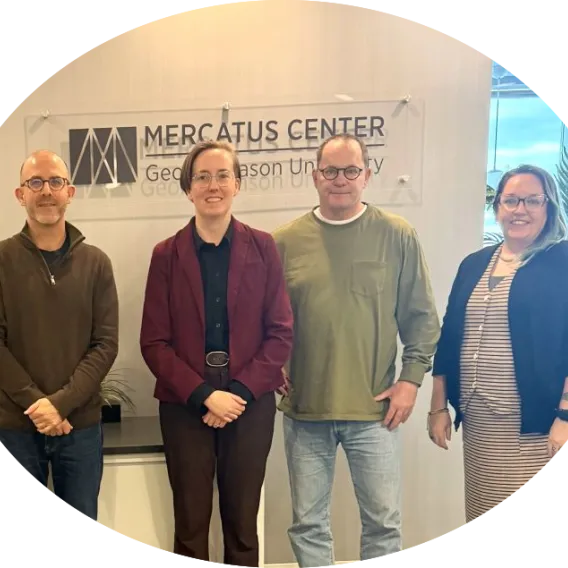
Getting to see how everyone, both for myself, going through the process of applying those readings directly into my work, and then seeing how others applied theirs, it was just really neat.
Her favorite part was the Bastiat Fellowship’s Research Sequence colloquia where fellows shared first drafts of their chapters. "Getting to see how everyone, both for myself, going through the process of applying those readings directly into my work, and then seeing how others applied theirs, it was just really neat." One chapter on Sundown Towns evolved into her dissertation topic. "So, I would say extremely valuable experience for me to explore these readings in different contexts, but with other scholars."
This year, with funding from the Institute for Humane Studies, Olivia is expanding her dissertation chapters into publications. The work continues themes she explored through Bastiat: how decades of institutional dynamics shape where communities are today, the knowledge problem, and Kirzner's market-based entrepreneurship. Even in her current role as a research associate looking at rural entrepreneurship and innovation ecosystems across the U.S., these frameworks remain central. "I still think that view of how decades of institutional dynamics can shape where we're at today. That and things like the knowledge problem, I think those have all enriched my understanding of complex ecosystems that I bring into my work."
Beyond intellectual frameworks, the fellowship provided something equally important: relationships built in laid-back cocktail hours and coffee breaks. "Academia can feel very stuffy sometimes," Olivia notes. "It's honestly in those more laid-back environments that I think it's easier for me to let my guard down and feel more comfortable engaged with these ideas just for the ideas." She stays in touch with fellows like Thomas Storrs, a historian-economist whose work on exclusionary historical institutions closely parallels hers. They recently co-presented at the Markets and Society conference.
The Bastiat program was very integral in my growth. [...] It's a place to refine who you are as a scholar.
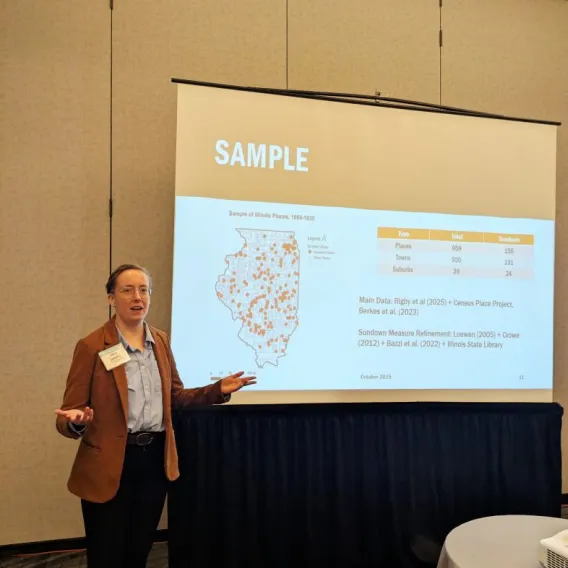
Olivia is candid about what made the fellowship work for her non-linear path. "There were times where I was in school full-time and work part-time or vice versa. There were times I needed to take a break from school and then come back to it for personal reasons. And I just felt like the Mercatus community was always there when I came back."
To prospective fellows, Olivia offers practical advice: "Do the readings ahead of time so that you can use more of the discussions to engage at a deeper level." But more importantly: "If you enter it with emphasis and embracing the discovery process for yourself, you're going to get a lot out of it. It's a place to refine who you are as a scholar." She emphasizes that the program meets you where you are, whether you have a specific research agenda or want to explore. "You can end up with a book chapter that is awesome and then get to build on that work in years to come."
Reflecting on her journey from graphic design major to PhD economist studying institutional exclusion, Olivia is clear about the fellowship's role: "There was no sudden moment where I graduated from research assistant to scholar, but I 100 million percent to be precise think the Bastiat program was very integral in my growth there." The program gave her space to discover her research and build relationships with scholars and peers who continue to enrich her work today.