Priyanka Venkat’s Mercatus Fellowship Story
How the Undergraduate Scholars Program Shaped Priyanka Venkat's Approach to Research
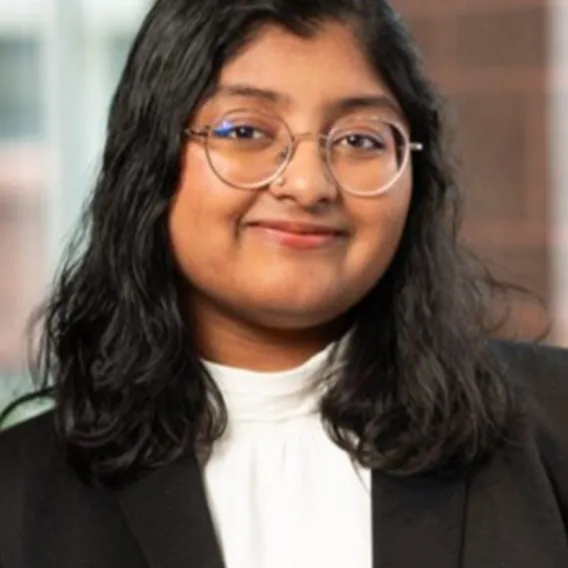

undefinedundefined
hen Priyanka Venkat arrived at George Mason University as an economics student, she brought a vague understanding of markets from high school. But studying at GMU introduced her to something different: Austrian economics, methodological individualism, and the idea that markets aren't abstract supply and demand curves, they're people making decisions. "I got very interested in how those people make decisions. And if we're treating them as the main unit of analysis, what incentives can be used to sort of drive how they make decisions," she explains.
When she discovered the Mercatus Center's Undergraduate Scholars Program, she saw an opportunity to dive deeper into these ideas. Today, as a Research Associate at the Cato Institute, Priyanka credits her time as an undergraduate fellow with shaping how she approaches research on local governance, housing, zoning, and resource distribution.
Priyanka applied for the Undergraduate Scholars Program in her sophomore year, drawn by the format and the opportunity. "The most exciting thing was getting together with a group of peers and being able to discuss these ideas through the Mercatus format," she says. "I was very excited at the chance to meet with some of our higher-level scholars and get their feedback."
The most exciting thing was getting together with a group of peers and being able to discuss these ideas through the Mercatus format.
The Undergraduate Scholars Program is designed for undergraduate students at George Mason University interested in learning about political economy. Through regular discussion sessions during the academic year, fellows explore foundational ideas in the Austrian, Bloomington, and Virginia schools of political economy.
The fellowship delivered exactly what Priyanka hoped for. "Through my experience in the fellowship, I grew a lot not only in my public speaking skills, but also in my understanding of these Austrian, Bloomington, Virginia schools of thought and how you can apply them to sort of modern policy solutions or just modern understandings of the market."
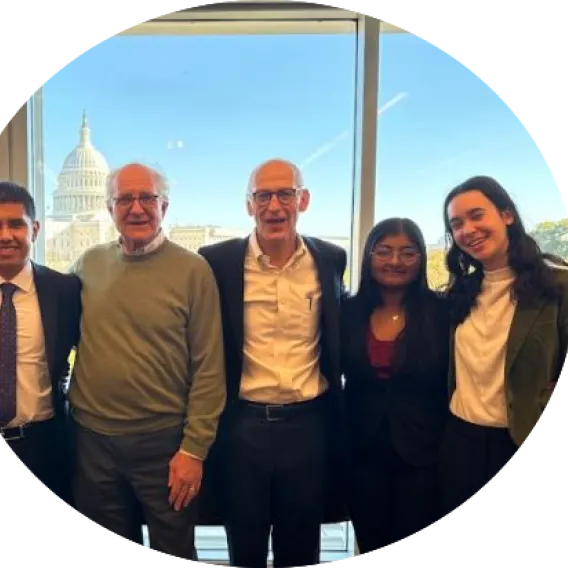
Through my experience in the fellowship, I grew a lot not only in my public speaking skills, but also in my understanding [...] of the market.
One session stands out vividly in her memory: a discussion on literature and political economy with Dr. Jayme Lemke. "There was this very impactful reading by Dr. Jayme Lemke where she talked about women in Louisiana." Paired with a reading of The Doll's House, the session left a lasting impact on how Priyanka thinks about government rules and individual behavior. "Her ability to talk to us helped me rationalize the ideas and also left an impact on me in understanding how the rules that government set influence people's behavior and how they respond to that."
Another memorable session came with Dr. Nathan Goodman discussing immigration and border control, reading Chandran Kukathas's Immigration and Freedom. "That's the big plus of the Mercatus Center's Undergraduate Scholars Program, getting the opportunity to talk with experts who moderate our discussions, who are trained to moderate so that their insights assist us in our discussion, but don't overpower us."
The fellowship's influence is evident in Priyanka's current work. "In my work, I always look at ways in which individual actors can shape social outcomes first, rather than automatically considering a top-down centralized approach," she explains. Whether analyzing budget, housing, or zoning issues, she starts with the individual. "I'm always thinking about the individual and individual groups and the individual voluntary associations and how they can shape social outcomes and change rather than first looking at what a politician can do."
I made many lasting friendships through the Mercatus Fellowship.

Public choice theory, particularly James Buchanan's "politics without romance," transformed how she views policy research. "Understanding how a large, centralized authority can actually hurt or limit the outcomes that they're trying to create when thinking about research, thinking about policy, that what I would say is the biggest change, taking the individual as that unit of analysis."
To prospective fellows, Priyanka offers clear advice: "Definitely try to engage with your scholars afterwards. Follow up with them. Talk to them about the ideas you discussed. They're always willing to, if they had the time, to sit and speak with you. Also engage with your peers. I made many lasting friendships through the Mercatus Fellowship." Most importantly: "Come to every group, every reading group prepared. Make sure that you do the readings, but also take the time to sit and consider the connections between different readings or the connections to your own research."
Priyanka's journey demonstrates how the Undergraduate Scholars Program helps young scholars approach questions with interdisciplinary thinking, and the habit of always starting analysis with the individual.