Stone Washington's Mercatus Fellowship Story
How the Frédéric Bastiat Fellowship Shaped Stone Washington's Research and Career

undefinedundefined
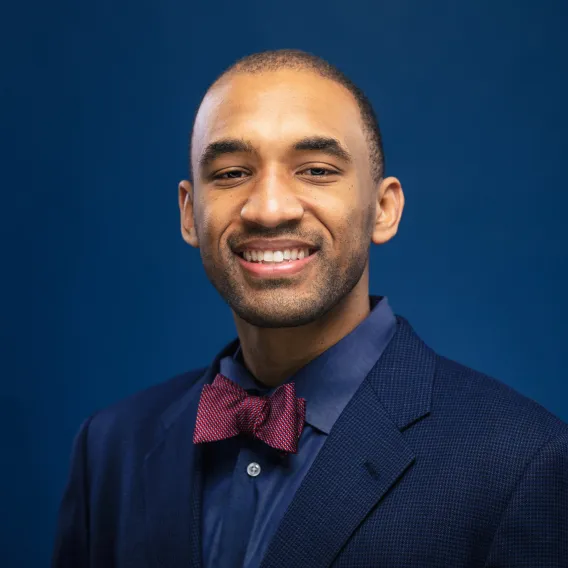
hen Stone Washington started his PhD program at Clemson University, he knew something was missing from his economics classes. "I really wanted that philosophical understanding that just wasn't really conveyed in my classes," he recalls. The Frédéric Bastiat Fellowship proved to be exactly that. Today, Stone credits the fellowship with giving him the philosophical understanding and practical tools that transformed both his research approach and his career trajectory.
Stone's path to the Bastiat Fellowship began with a professor's recommendation. "A professor in the political science department at Clemson who I was a teaching assistant for, he recommended that I look into IHS student fellowship opportunities," he explains. That research led him naturally to the Mercatus Center. "I was just really fascinated by the Mercatus Center's website and about the wide range of fellowships that you offer graduate students through the various opportunities like the Adam Smith Fellowship, the Elinor Ostrom Fellowship, and then of course the Bastiat one."
I really wanted that philosophical understanding that just wasn't really conveyed in my classes.
The Frédéric Bastiat Fellowship is a one-year program that brings together graduate students from different universities and disciplines, including economics, law, political science, and public policy. Through collaborative discussions with peers and Mercatus scholars, fellows explore how the Austrian, Virginia, and Bloomington schools of political economy provide foundations for contemporary policy analysis and apply to real-world challenges.
What drew Stone to Bastiat specifically was its focus on political economics. "I gravitated towards the Bastiat Fellowship because they cater to, I think, primarily students who had a political science, public policy, and economics major," he says. "I just felt like the Bastiat Fellowship was just the perfect fit for me. I just wanted an area where I could better understand political economics and fill the void that some of my classes weren't filling for me in terms of better understanding important issues of law and economics and the primary thinkers that drive mainline economics."
The interdisciplinary focus of this program got me thinking about how limited perhaps some of my myopic views of my research had been in the past. My issue area doesn't exist in a silo. It's part of a web of interconnectedness.
For Stone, the fellowship filled a critical gap. "My classes were just so heavy on the numbers and on quantitative analysis and just the kind of empirical research which I think is great, but I just don't think that you can approach economics from a wholesale way without really considering also the philosophical and theoretical lens. I knew I was going to get that through the Bastiat Fellowship and I'm just so grateful to them for that. But yeah, it really helped me with my professional development." The fellowship taught him about mainline economists, Friedrich Hayek, Elinor Ostrom, James Buchanan, Vernon Smith, Ronald Coase, giving him "the founding fathers of economics, how were their ideas interconnected, what were the chief takeaways of their theoretical contributions, and why should we care about that today."
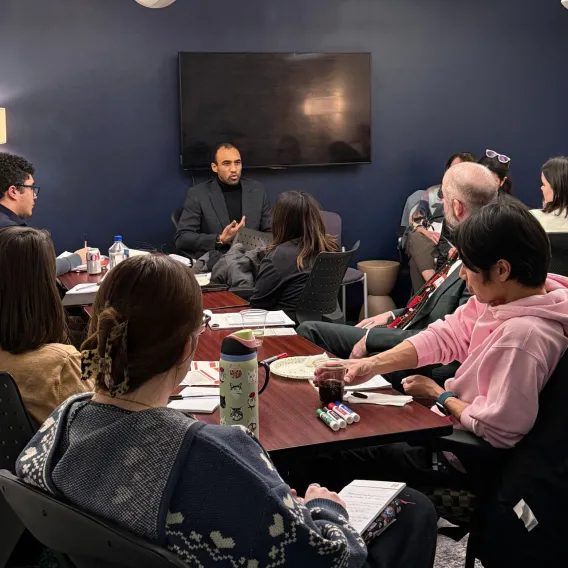
During Stone's second year in the fellowship, the research sequence, the cohort worked on a book about polycentricity, with each fellow contributing a chapter. Stone's focused on self-regulatory organizations in financial markets. "The most impactful experience was I think during the May 2024 colloquia where I really, really benefited from the final day of discussions, like really heated discussions about how to improve our draft book chapters and how to incorporate advice amongst each other."
The interdisciplinary environment opened Stone's eyes to connections he hadn't considered: "The interdisciplinary focus of this program got me thinking about how limited perhaps some of my myopic views of my research had been in the past. My issue area doesn't exist in a silo. It's part of a web of interconnectedness."
I think the Mercatus Center, to my knowledge, is the only organization that gives you this unique access to these smart, scholarly people who [...] are going to be able to fill that void or that gap in terms of your knowledge of political economics.
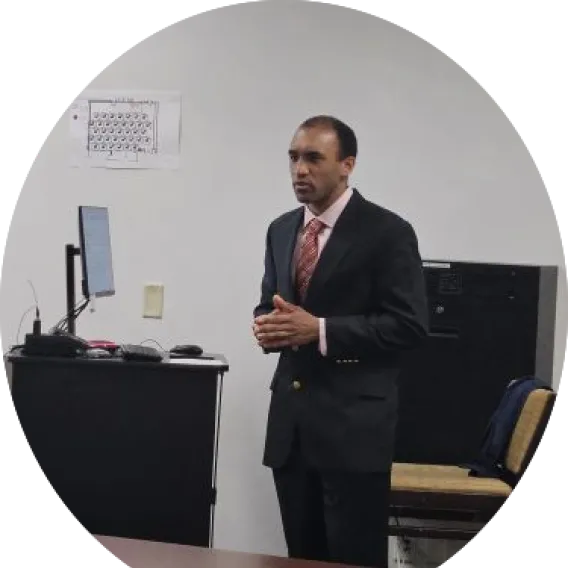
To prospective fellows, Stone offers clear advice: "Definitely be prepared to step out of your comfort zone. It might be a little difficult, maybe even painful at first, but whenever you want to stay silent, don't stay silent." He emphasizes that "there's not really a dumb question that you could ask. Everybody always thinks that the questions that people ask are important, are useful, and have contributed something to the overall discussion."
He also highlights the importance of informal interactions. "Those happy hour sessions, I think were just so great. I always had the temptation of saying, maybe I shouldn't go to these happy hours because I'm just so tired. But no, every time I always went."
For Stone, the Bastiat Fellowship provided something irreplaceable. "I think the Mercatus Center, to my knowledge, is the only organization that gives you this unique access to these smart, scholarly people who know about political economics, have studied with the great Nobel laureates in mainline economics, are going to be able to fill that void or that gap in terms of your knowledge of political economics."