Veronica Zivava’s Mercatus Fellowship Story
How the Mercatus fellowship helped Veronica see Africa through new lenses

undefinedundefined
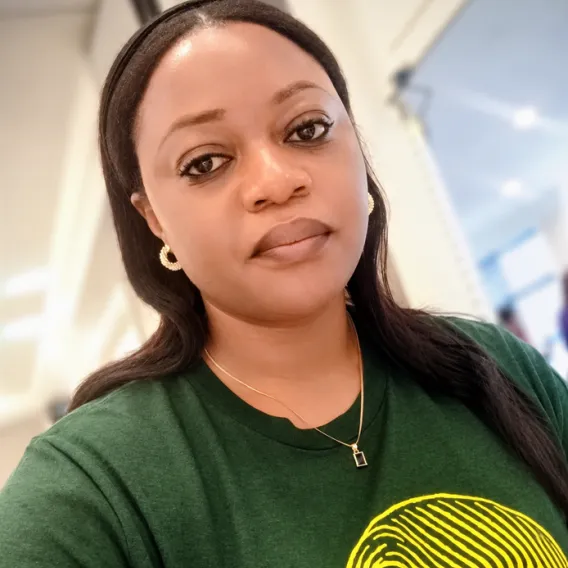
eronica Zivava grew up in a rural community in Mutare, Zimbabwe. In her village, very few women attended and completed primary education; even fewer pursued their studies to Ordinary Level. Oftentimes, the role of the girl child was perceived as to grow up and get married. In her case, her mother’s willingness to send her to university changed her path and made Veronica begin questioning the future of all the young girls who weren't afforded that opportunity. “Looking back at the community, seeing these young girls, 15 years, 16 years old getting married and their hopes of life being shattered, and not having anything to look up to for life just inspired me to say, you know what, I think I have to do something”.
Looking back at the community, seeing these young girls, 15 years, 16 years old getting married and their hopes of life being shattered, and not having anything to look up to for life just inspired me to say, you know what, I think I have to do something.
Since her postgraduate studies in 2019, Veronica’s intellectual trajectory has shifted to investigating the gendered political economy of extractive regions, a shift catalysed by her personal experience of the paradox between mineral abundance and women's marginalisation in a diamond-rich community in Marange, Zimbabwe. This fundamental contrast now underpins her Doctoral research, which interrogates how extractive economies shape women's agency, livelihoods, and socio-economic realities in resource-dependent landscapes, with a focus on South Africa. Her master's thesis, The gendered dimensions of mining-induced displacements in Zimbabwe: the case of Marange, 2006-2021, was inspired by the March 2006 diamond rush and the subsequent state-led devastating displacements of local communities in 2011. “What intrigued me was the stark contrast between the discovery of high-value diamonds and the inherent entrenchment of local poverty, especially among women, whose initial hope of economic emancipation rapidly devolved into dispossession, exploitation, and profound gendered marginalisation”. The predatory system of severe exploitation, injustice and profound human rights violations associated with illicit diamond mining in the area became her research focus.
What stood out to me most was the robustness of the ideas such as Adam Smith's spontaneous order, the idea of how communities could cooperate and find peace for economic growth. These ideas were incredible for me, as they helped me understand many of the root causes of Africa’s problems today. Free-market ideas affect our continent deeply
Veronica is currently pursuing her PhD in South Africa. She is trained in African educational and gender contexts and had limited exposure to mainstream political economy frameworks until she discovered the Mercatus Centre on LinkedIn.
“I learned about the Mercatus Centre fellowships in 2022 through an alumna whose successful completion of the program inspired me to reach out and ultimately apply. How is this program? How do you apply? How did you get it? After reviewing scholars who had completed their fellowships and reading about how they gained knowledge of political economy, institutional development, and economic governance, I was profoundly inspired. I also became more curious about the Austrian, Virginia, and Bloomington schools of thought and how they could influence my focus on mining regions. I then sent my first application for the Don Lavoie Fellowship.”
Veronica was accepted to the Don Lavoie Fellowship, an online, semester-long program for undergraduate students, recent graduates and young professionals considering graduate school, and early-stage graduate students interested in political economy. Through online discussions with peers and scholars, fellows explore key ideas in the Austrian, Virginia, and Bloomington schools of political economy and discover how to apply these frameworks to academic and policy research.
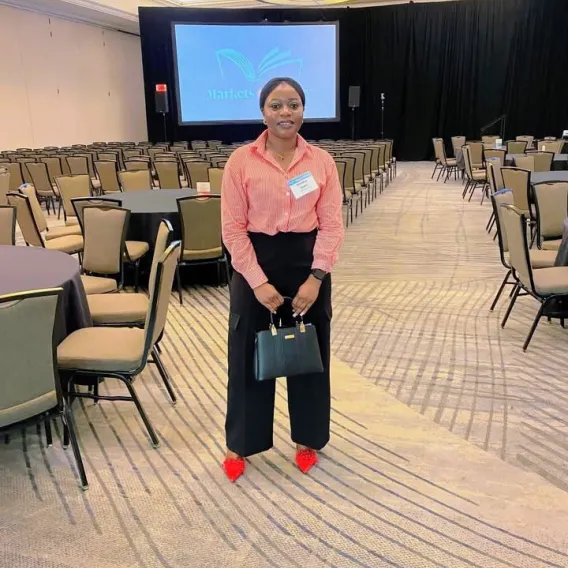
“Attending the colloquium [Markets & Society 2025] for the first time was a great experience for me. It was my first time being engaged with American education systems. First, the systems were very different from what I was exposed to in Africa. The learning processes were completely different. The robustness was profoundly impressive. As an academic enthusiast, I felt inspired, learned a lot, and wanted to learn even more! The ideas of free markets and economic freedom resonated deeply with Africa's challenges.”
The Mercatus Centre has been instrumental in my development as a global scholar. Through the fellowships and the [Markets & Society] conference, I had an opportunity to interact with the faculty, and the ideas I encountered during my fellowship fundamentally reshaped my scholarly perspective, prompting my first visit to the United States and opening opportunities across Europe
Adam Smith's spontaneous order resonated with her. It gave her a framework to understand her own context. "What stood out to me most was the robustness of the ideas such as Adam Smith's spontaneous order, the idea of how communities could cooperate and find peace for economic growth. These ideas were incredible for me, as they helped me understand many of the root causes of Africa’s problems today. Free-market ideas affect our continent deeply.”
As a direct result of Veronica’s participation in the Don Lavoie Fellowship, she published a policy brief. It's entitled The Gender Dimensions of Politics and Governance in Zimbabwe. While applying institutional analysis and governance frameworks to her research, the fellowship strengthened her interdisciplinary approaches to understanding policy, institutions, and community-led development. In the policy brief, she analysed how decentralisation and local knowledge systems could shape women’s involvement in politics and Governance in African contexts, particularly Zimbabwe.
After completing the Don Lavoie Fellowship in December 2022, Veronica reapplied and received an offer to join the Carl Menger Fellowship, a one-year online program for doctoral students from any university and discipline interested in political economy.
Like the Don Lavoie Fellowship, the Carl Menger Fellowship profoundly shaped the theoretical and methodological trajectory that influenced her research.
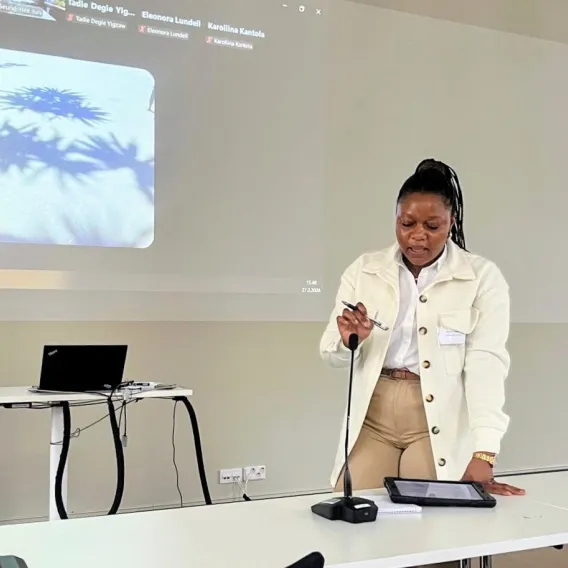
“The Carl Menger Fellowship fundamentally shaped my research on the nexus between state intervention, economic freedom, and development in Africa. This intellectual trajectory culminated in my presentation, Economic Freedom Amidst Constrained Liberties: A Case Study of Southern Africa in the 21st Century, at the 2025 [Markets & Society] conference.”
Veronica is currently in her third year of a PhD in Economic History at North-West University in South Africa. Her academic journey attests to the profound impact of the Mercatus Centre.
“The Mercatus Centre has been instrumental in my development as a global scholar. Through the fellowships and the [Markets & Society] conference, I had an opportunity to interact with the faculty, and the ideas I encountered during my fellowship fundamentally reshaped my scholarly perspective, prompting my first visit to the United States and opening opportunities across Europe. These included an invitation in Sweden as a Guest Researcher and the opportunity to present my research on mining regions at the Development Days conference in Helsinki, Finland.”