Zofia Maruszewska's Mercatus Fellowship Story
How Mercatus Fellowships Helped Zofia Maruszewska Discover Her Path in Economics


undefinedundefinedhen Zofia Maruszewska discovered the Exploring Complex Solutions fellowship through a Facebook ad while living in Poland, she saw something she desperately needed: access. "My school did not teach economics at all," she explains. "I was just looking for ways to explore. I knew I was interested in it, but I also lacked any sort of education in it." As a high school student, Zofia had no way to pursue her growing curiosity about economics. The fellowship changed everything. Today, as a college freshman studying economics with interests in economic history and quantitative methods, Zofia credits her three years participating in Mercatus fellowships taking the Exploring Complex Solutions fellowship twice in high school and currently participating in the Don Lavoie Fellowship with shaping her entire academic trajectory and showing her what economics could be.
It's organized by university. That caught my interest. This will be high level. This will be interesting.
The Exploring Complex Solutions fellowship is designed for high school students interested in political economy. The online format makes it accessible to students worldwide, creating a community of peers exploring foundational economic ideas together. For Zofia in Poland, six hours ahead of the East Coast, the accessibility was everything. "It's organized by university. That caught my interest. This will be high level. This will be interesting. And that you can actually learn some economics with other high schoolers. There's not going to be that much pressure. It will be with people your own age. And it's all online, which also was a big plus for me."
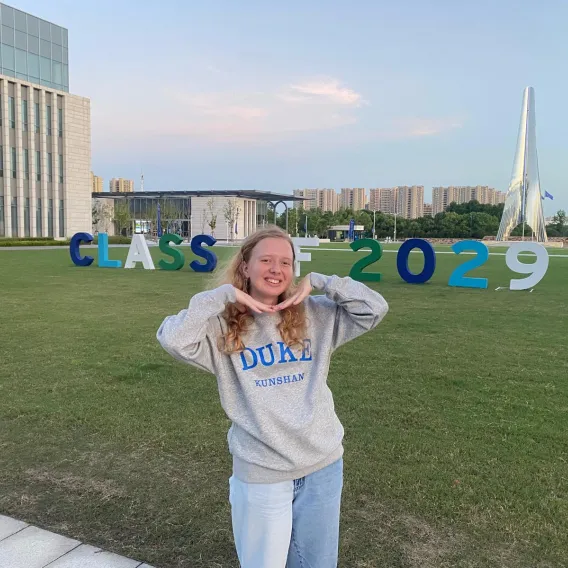
The fellowship did not teach me what supply and demand was, I had to learn that myself. But it still made me see the fun side of economics, the things that I want to research, the things that I'm interested in, the things that I like reading about.
The fellowship did more than teach economics, it showed her the fun side. "The fellowship did not teach me what supply and demand was, I had to learn that myself. But it still made me see the fun side of economics, the things that I want to research, the things that I'm interested in, the things that I like reading about." Among her favorite books was Doing Bad by Doing Good by Christopher Coyne. "It was a great introduction to the economic debate in general and I had the chance to actually see everything as a timeline of events. I can identify people and certain ideas and how these ideas evolved through time."
After participating twice in high school, Zofia applied to the Don Lavoie Fellowship as a college freshman. The jump was significant. "The first two discussion sessions of the Don Lavoie Fellowship I was so scared because there were so many smart people in there and I'm a college freshman, people here have masters and there's a lawyer there as well, like what am I doing here?" But she quickly discovered the value. "Those high caliber people, yes, they are kind of scary at first, but it means that they know so much and they have so much to teach you and so much to discuss. And they bring up such interesting issues that I once again could not have heard about anywhere else."
The Don Lavoie Fellowship is an online, semester-long program for undergraduate students, recent graduates and young professionals considering graduate school, and early-stage graduate students interested in political economy. Through online discussions with peers and scholars, fellows explore key ideas in the Austrian, Virginia, and Bloomington schools of political economy and discover how to apply these frameworks to academic and policy research.
Just because you're in economics doesn't mean you have to work in finance and work in a bank. There's so many things you could do and those people are still very much having fun with it.
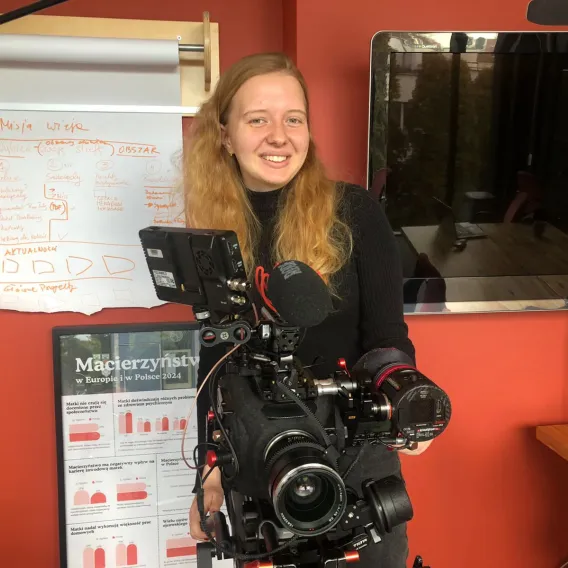
Beyond content knowledge, the fellowships gave Zofia perspective. "Just understanding of many different perspectives. Because once again, it's not every day that you get to experience so many different viewpoints from all over the world." In high school, it showed her that yes, it's okay to study economics and have real interest in it. In college, it's showing her all the different paths she could take. "Just because you're in economics doesn't mean you have to work in finance and work in a bank. There's so many things you could do and those people are still very much having fun with it."
To prospective fellows, Zofia offers clear advice: "Don't be shy. Even if you think that you're the dumbest person in the room, there's no such thing. There's always going to be someone to help you, to guide you, to make it just a fun conversation. So don't be shy, especially in the discussion forum. Do the reading. The reading is fun. You're not reading textbooks. You're reading actual works of nonfiction that are pretty interesting."
Zofia's journey demonstrates how the Mercatus fellowships not only provide knowledge for students, but a global intellectual community and the confidence to pursue what they love.